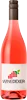
Winery ViajurCabernet Sauvignon Rosé
 Pink wine
This wine generally goes well with poultry, beef or lamb.
Food and wine pairings with Cabernet Sauvignon Rosé
Pairings that work perfectly with Cabernet Sauvignon Rosé



Original food and wine pairings with Cabernet Sauvignon Rosé

The Cabernet Sauvignon Rosé of Winery Viajur matches generally quite well with dishes of beef, lamb or spicy food such as recipes of boeuf en daube, lamb stew from my mum or braised chicken and plantains.
Details and technical informations about Winery Viajur's Cabernet Sauvignon Rosé.
Discover the grape variety: Cabernet-Sauvignon
Cabernet-Sauvignon noir is a grape variety that originated in France (Bordeaux). It produces a variety of grape specially used for wine making. It is rare to find this grape to eat on our tables. This variety of grape is characterized by small bunches, and small grapes. Cabernet-Sauvignon noir can be found in many vineyards: South-West, Loire Valley, Languedoc & Roussillon, Cognac, Bordeaux, Armagnac, Rhone Valley, Provence & Corsica, Savoie & Bugey, Beaujolais.
Informations about the Winery Viajur
The Winery Viajur is one of of the world's greatest estates. It offers 15 wines for sale in the of Slovakia to come and discover on site or to buy online.

The wine region of Slovakia
Slovakia (officially The Slovak Republic) is a landlocked country described as being either at the eastern edge of Western Europe, or the western edge of Eastern Europe. This dichotomy reflects the state's recent history, a story of political unrest common in this region. The lands that are now Slovakia were an integral Part of Hungary for almost 900 years, but became independent when the Austro-Hungarian Empire was dismantled after the First World War. Almost immediately, Slovakia aligned itself with Bohemia and Moravia (the modern-day Czech Republic), Silesia and Carpathian Ruthenia to form Czechoslovakia.
The word of the wine: Hybrid
Term designating grape varieties obtained from two different vine species.