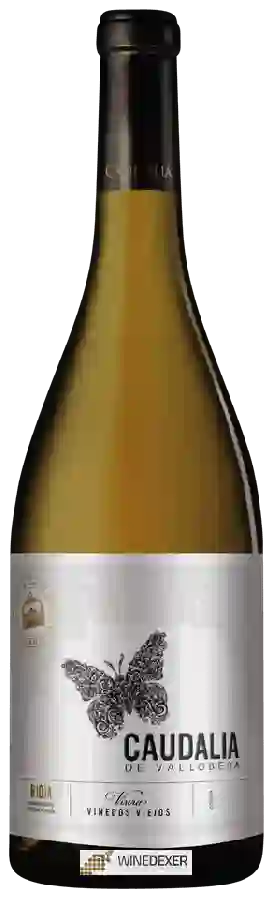
Bodegas ValloberaCaudalia Rioja
 White wine



In the mouth this white wine is a powerful with a nice freshness.
This wine generally goes well with appetizers and snacks, lean fish or shellfish.

Taste structure of the Caudalia Rioja from the Bodegas Vallobera
Light | Bold | |
Dry | Sweet | |
Soft | Acidic |
In the mouth the Caudalia Rioja of Bodegas Vallobera in the region of Rioja is a powerful with a nice freshness.
Food and wine pairings with Caudalia Rioja
Pairings that work perfectly with Caudalia Rioja



Original food and wine pairings with Caudalia Rioja

The Caudalia Rioja of Bodegas Vallobera matches generally quite well with dishes of shellfish, appetizers and snacks or lean fish such as recipes of raoul's bouillabaisse, mozzarella sticks or baked whiting fillets with julienne vegetables.
Details and technical informations about Bodegas Vallobera's Caudalia Rioja.
Discover the grape variety: Charmont
Aromatic, structured dry whites with a pale golden robe, an ample palate and preserved acidity of refined white flowers (acacia, hawthorn), yellow fruits (peach, pear), citrus and mineral notes. An elegant profile between chasselas and chardonnay. Grown in French-speaking Switzerland for modern cuvées and identity blends. Swiss grape created in 1965 at Pully by André Jaquinet (chasselas × chardonnay).
Last vintages of this wine
The best vintages of Caudalia Rioja from Bodegas Vallobera are 2016, 2017
Informations about the Bodegas Vallobera
The Bodegas Vallobera is one of of the world's great estates. It offers 22 wines for sale in the of Rioja to come and discover on site or to buy online.

The wine region of Rioja
Star of great Spanish reds: signature Tempranillo, elegant and complex, with notes of ripe cherry, plum, leather, vanilla and tobacco from American oak ageing. Classification by age: fruity Joven, balanced Crianza, ample Reserva, deep, silky Gran Reserva (5 years, 2 in barrel). Some fresh Viura whites and generous rosés. Spain's first DOCa (1991), 3 sub-zones (Alta, Alavesa, Oriental), 93.
The word of the wine: Paille (wine of)
A sweet wine obtained by passerillage after harvesting bunches of grapes placed on racks or hung in well-ventilated premises.