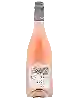
Winery PlaimontDomaine d'Aula Rosé
 Pink wine



This wine generally goes well with
Wine flavors and olphactive analysis

Details and technical informations about Winery Plaimont's Domaine d'Aula Rosé.
Discover the grape variety: Frontenac
A cross between Landot 4511 and Vitis Riparia 89 (very resistant to cold) obtained in 1978 at the University of Minnesota (United States) and propagated from 1996. It can also be found in Canada (Quebec, Ontario, etc.), in Lithuania, etc. In France, it is practically unknown. Note that the white and grey Frontenac are derived from mutations of the black, encountered and isolated in 2003 for the grey and in September 2005 for the white. - Synonymy: MN 1047 (for all the grape variety synonyms, click here!).
Last vintages of this wine
The best vintages of Domaine d'Aula Rosé from Winery Plaimont are 2016, 2015, 2017
Informations about the Winery Plaimont
The Winery Plaimont is one of of the world's great estates. It offers 362 wines for sale in the of Gascogne to come and discover on site or to buy online.

The wine region of Gascogne
Between the Landes forest, the Garonne and the Pyrenees, the Gascony hillsides cover the Gers dePartment and part of the Landes and Lot-et-Garonne departments. The vineyards occupy the same area as Armagnac, a brandy still produced in the region, but whose volumes have declined in favour of vins de pays (now PGI). Under the influence of a mild oceanic Climate, it is fairly wet in the west, drier in the east, especially in summer. In the west, the subsoil of tawny sands is of marine origin, covered with boulbènes; in the east, it gradually gives way to molasse, a rock resulting from the erosion of the Pyrenees.
The wine region of South West
The South-West is a large territorial area of France, comprising the administrative regions of Aquitaine, Limousin and Midi-Pyrénées. However, as far as the French wine area is concerned, the South-West region is a little less clear-cut, as it excludes Bordeaux - a wine region so productive that it is de facto an area in its own right. The wines of the South West have a Long and eventful history. The local rivers play a key role, as they were the main trade routes to bring wines from traditional regions such as Cahors, Bergerac, Buzet and Gaillac to their markets.
The word of the wine: Delicate
Said of a wine that is fine and subtle in the mouth.