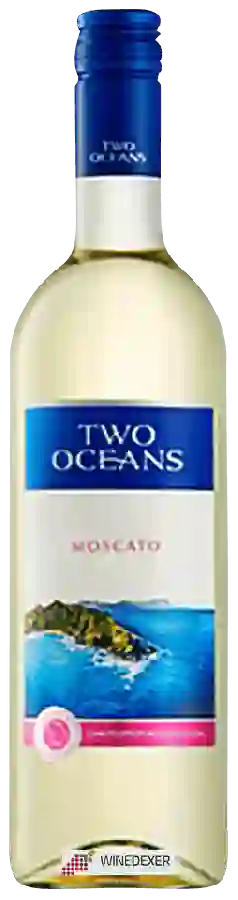
Winery Two OceansMoscato
 White wine



This wine generally goes well with
Wine flavors and olphactive analysis



On the nose the Moscato of Winery Two Oceans in the region of Western Cape often reveals types of flavors of earth, oak or tree fruit and sometimes also flavors of spices, citrus fruit or tropical fruit.
Details and technical informations about Winery Two Oceans's Moscato.
Discover the grape variety: Gouais
It is certainly one of the oldest known grape varieties as it is already reported in the Middle Ages as producing a poor quality wine. Some claim that it has its first origins in eastern France and others in Croatia. It would then have been introduced into France by the Romans, nearly 2,000 years ago. Published genetic analyses have revealed that it is related to several grape varieties, including Saint Côme, Raffiat de Moncade, Muscadelle, Jurançon Blanc, Grease, Colombard, and Mademoiselle Blanche. For more information, click here. Today, the Gouais has practically disappeared from the vineyard, it is still cultivated somewhat in the upper Swiss Valais under the name of Gwäss or Gwaëss.
Last vintages of this wine
The best vintages of Moscato from Winery Two Oceans are 2018, 2015, 0, 2016 and 2017.
Informations about the Winery Two Oceans
The Winery Two Oceans is one of of the world's greatest estates. It offers 22 wines for sale in the of Western Cape to come and discover on site or to buy online.

The wine region of Western Cape
The Western Cape is home to the vast majority of the South African wine industry, and the country's two most famous wine regions, Stellenbosch and Paarl. The city of Cape Town serves as the epicenter of the Cape Winelands, a mountainous, biologically diverse area in the south-western corner of the African continent. A wide variety of wines are produced here. Wines from the Shiraz and Pinotage">Pinotage grape varieties can be fresh and juicy or Full-bodied and gutsy.
The word of the wine: Rosé (champagne)
Unique rosé wine made by blending white wine with a small amount of red Champagne. It is however possible to vinify the must directly into rosé.