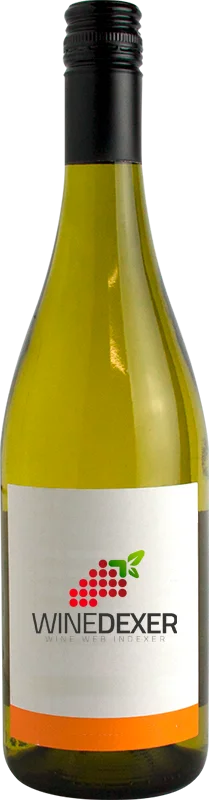
Winery Trulli il CastagnoMoscato
 White wine
In the mouth this white wine is a powerful.
This wine generally goes well with vegetarian, appetizers and snacks or shellfish.
Taste structure of the Moscato from the Winery Trulli il Castagno
Light | Bold | |
Dry | Sweet | |
Soft | Acidic |
In the mouth the Moscato of Winery Trulli il Castagno in the region of Puglia is a powerful.
Food and wine pairings with Moscato
Pairings that work perfectly with Moscato



Original food and wine pairings with Moscato
The Moscato of Winery Trulli il Castagno matches generally quite well with dishes of shellfish, vegetarian or appetizers and snacks such as recipes of cuttlefish in sauce, goat cheese and bacon quiche or peach and tuna verrine.
Details and technical informations about Winery Trulli il Castagno's Moscato.
Discover the grape variety: Concord
It is the result of a seedling planted in the United States, around 1840, recovered near the Concord River, a small river located east of Massachusetts. According to genetic analysis, it is an interspecific cross between the catawba and a vitis labrusca. Concord was for a long time the main variety cultivated in North America. It was introduced into Europe at the beginning of the 19th century, in France at the beginning of the phylloxera crisis, but was not widely propagated. It could be found in the Valleraugue region (Gard) at the foot of Mont Aigoual, in the Ardèche (our photos), etc. Today, it exists only as an isolated strain that can sometimes be found on the edge of a slope, which was our case. Through various and numerous crosses, it has been used to obtain some rootstocks and direct producer hybrids, which have now almost all disappeared.
Informations about the Winery Trulli il Castagno
The Winery Trulli il Castagno is one of of the world's greatest estates. It offers 5 wines for sale in the of Puglia to come and discover on site or to buy online.

The wine region of Puglia
Puglia (Apulia to many English speakers) is a Long, slender wine region in the extreme Southeast corner of Italy's "boot". To use the shoe analogy often used to illustrate the shape of Italy, Apulia extends from the tip of the heel to the mid-calf, where the spur of the Gargano Peninsula juts out into the Adriatic Sea. The heel (the Salento peninsula) occupies the southern half of the region and is of great importance for the identity of Puglia. Not only are there cultural and geographical differences from Northern Puglia, but the wines are also different.
The word of the wine: Stripped
Said of a wine that is generally too old and has lost its colour, volume and power.