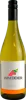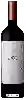
Winery SummusMalbec
 Red wine


In the mouth this red wine is a powerful.
This wine generally goes well with poultry, beef or lamb.
Taste structure of the Malbec from the Winery Summus
Light | Bold | |
Smooth | Tannic | |
Dry | Sweet | |
Soft | Acidic |
In the mouth the Malbec of Winery Summus in the region of San Juan is a powerful.
Food and wine pairings with Malbec
Pairings that work perfectly with Malbec



Original food and wine pairings with Malbec
The Malbec of Winery Summus matches generally quite well with dishes of beef, lamb or poultry such as recipes of wild boar stew in burgundy style, leg of lamb with spices or royal couscous.
Details and technical informations about Winery Summus's Malbec.
Discover the grape variety: Malbec
Malbec, a high-yielding red grape variety, produces tannic and colourful wines. It is produced in different wine-growing regions and changes its name according to the grape variety. Called Auxerrois in Cahors, Malbec in Bordeaux, it is also known as Côt. 6,000 hectares of the Malbec grape are grown in France (in decline since the 1950s). Malbec is also very successful in Argentina. The country has become the world's leading producer of Malbec and offers wines with great potential.
Last vintages of this wine

The best vintages of Malbec from Winery Summus are 2017, 2012, 0
Informations about the Winery Summus
The Winery Summus is one of of the world's greatest estates. It offers 12 wines for sale in the of San Juan to come and discover on site or to buy online.

The wine region of San Juan
San Juan is an important Argentinean wine-producing area, producing wines of increasing quality using traditional European Grape varieties. The wine region of San Juan covers the administrative area of the same name in the north-western corner of Argentina. The province sits between Mendoza and La Rioja, and is almost entirely contained within the mountainous foothills of the Andes. In terms of production Volume, San Juan is Argentina's second-largest wine region after Mendoza.
The word of the wine: Aging
Period during which a wine is kept in a cellar where it goes through different phases of evolution of its aromatic range and a maturation of its constituents (evolution of the colour, refining of the tannins, harmonization of the different flavours, etc.). The wine evolves better and less quickly in large containers, whereas it deteriorates prematurely in half-bottles.