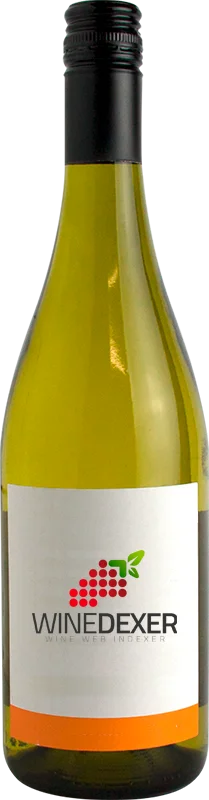
Winery Stéphane BergCuvée Exceptionnelle Muscat
 White wine
This wine generally goes well with spicy food and sweet desserts.
Food and wine pairings with Cuvée Exceptionnelle Muscat
Pairings that work perfectly with Cuvée Exceptionnelle Muscat


Original food and wine pairings with Cuvée Exceptionnelle Muscat
The Cuvée Exceptionnelle Muscat of Winery Stéphane Berg matches generally quite well with dishes of spicy food or sweet desserts such as recipes of lamb tagine with honey and onions or tarte tatin.
Details and technical informations about Winery Stéphane Berg's Cuvée Exceptionnelle Muscat.
Discover the grape variety: Baco blanc
Interspecific crossing obtained in 1898 by François Baco (1865-1947) between the folle blanche and the noah, which it resembles somewhat. With the latter, Baco blanc is distinguished by a light beige felt under the leaf, whereas it is white for the noah. It is registered in the Official Catalogue of wine grape varieties list A1.
Informations about the Winery Stéphane Berg
The Winery Stéphane Berg is one of of the world's great estates. It offers 18 wines for sale in the of Alsace to come and discover on site or to buy online.

The wine region of Alsace
Alsace, located in the extreme north-east of France, is Distinguished from other French wine regions by its strong Franco-Germanic influences. These influences are the result of a back-and-forth between the German and French sovereignties over the last few centuries. They can be seen not only in the architecture and culture of Alsace, but also in the wines. Alsace wines are produced under three main appellations: Alsace and Alsace Grand Cru for still white wines (Sweet and Dry), and Crémant d'Alsace for Sparkling wines.
The word of the wine: Local wine
Table wine, but with the origin indicated. It corresponds to a particular legislation: the freedom to use grape varieties is greater than for the AOC, but the quality criteria such as the approval tastings can sometimes be more demanding. The legislation is still evolving, but for the moment there are three levels: regional (e.g. Vin de Pays d'Oc), departmental and local (e.g. Côtes de Thongue).