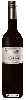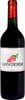
Winery Sparrmuhle Werner ManzPortugieser Rosé Halbtrocken
 wine
wine
This wine generally goes well with
The Portugieser Rosé Halbtrocken of the Winery Sparrmuhle Werner Manz is in the top 0 of wines of Rheinhessen.
Details and technical informations about Winery Sparrmuhle Werner Manz's Portugieser Rosé Halbtrocken.
Discover the grape variety: Gamay de Chaudenay
Unlike its dyer congeners, Gamay de Chaudenay is said to have "white juice". It is a cross between white gouais and pinot noir that gave birth to this grape variety from the north of Lyon, and its alternative names are Olivette Beaujolaise, Gamay de Caudoz and Gamay d'Arcenant. It is a variety that buds early in the year and is susceptible to wood diseases and excoriosis. Its three-lobed, finely serrated leaves are almost round and hairless. The youngest leaves are slightly shiny and yellowish-green in color. The plant matures in the first late season and bears small clusters, winged or not, of cylindrical shape. These clusters contain medium-sized, ovoid, grayish-black berries. The skin provides a dark coloured pulp when ripe. When vinified, the Gamay de Chaudenay gives a wine that is low in tannin but rather colourful. Notes of spice and fruit characterize the warm but short-lived wines that emerge.
Informations about the Winery Sparrmuhle Werner Manz
The Winery Sparrmuhle Werner Manz is one of of the world's greatest estates. It offers 12 wines for sale in the of Rheinhessen to come and discover on site or to buy online.

The wine region of Rheinhessen
Rheinhessen is Germany's largest region for producing the quality wines of the Qualitätswein bestimmter Anbaugebiete (QbA) and Prädikatswein designations, with roughly 26,500 hectares (65,000 acres) of Vineyard">Vineyards as of 2014. Many of its most significant viticultural areas are favorably influenced by the Rhine river, which runs aLong its North and eastern borders. The Rhine, along with the Nahe river to the west and the Haardt mountains to its South, form a natural border. Rheinhessen covers an area south of Rheingau, north of Pfalz and east of Nahe, and is located within the Rhineland-Palatinate federal state.
The word of the wine: Deposit
Solid particles that can naturally coat the bottom of a bottle of wine. It is rather a guarantee that the wine has not been mistreated: in fact, to avoid the natural deposit, rather violent processes of filtration or cold passage (- 7 or - 8 °C) are used in order to precipitate the tartar (the small white crystals that some people confuse with crystallized sugar: just taste to dissuade you from it)