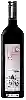
Domaine des SouleillesCoup de Foudre Malepère
 Red wine



This wine generally goes well with
Details and technical informations about Domaine des Souleilles's Coup de Foudre Malepère.
Discover the grape variety: Abondance
A very old grape variety that was once grown in Savoie and more generally in the Isère Valley, but has now almost disappeared from the vineyards. It should not be confused with Abundant which is a white grape variety formerly cultivated in eastern France.
Last vintages of this wine
The best vintages of Coup de Foudre Malepère from Domaine des Souleilles are 2009
Informations about the Domaine des Souleilles
The Domaine des Souleilles is one of of the world's greatest estates. It offers 6 wines for sale in the of Malepère to come and discover on site or to buy online.

The wine region of Malepère
Malepere is an appellation of red and rosé wines from an area immediately Southwest of Carcassonne in the Languedoc-Rousillon wine region of southern France. The appellation was created as VDQS Côtes de la Malepere in January 1983 and was promoted to FullAOC status in 2007, under the simpler name Malepere. As with the stylistically similar Cabardes appellation (directly to the North), Malepere wines are made from an eclectic combination of Bordeaux and Languedoc grapes. Merlot is the most widely used, combined with Cabernet Sauvignon, Malbec, Grenache, Syrah and Cinsaut.
The wine region of Languedoc-Roussillon
Languedoc (formerly Coteaux du Languedoc) is a key appellation used in the Languedoc-Roussillon wine region of southern France. It covers Dry table wines of all three colors (red, white and rosé) from the entire region, but leaves Sweet and Sparkling wines to other more specialized appellations. About 75% of all Languedoc wines are red, with the remaining 25% split roughly down the middle between whites and rosés. The appellation covers most of the Languedoc region and almost a third of all the vineyards in France.
The word of the wine: Brut nature (or ultra brut)
A type of champagne that has not received any dosage liqueur.