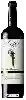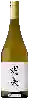
Winery Solar de SamaniegoGraciano
 Red wine


In the mouth this red wine is a powerful with a nice balance between acidity and tannins.
This wine generally goes well with poultry, beef or veal.
Taste structure of the Graciano from the Winery Solar de Samaniego
Light | Bold | |
Smooth | Tannic | |
Dry | Sweet | |
Soft | Acidic |
In the mouth the Graciano of Winery Solar de Samaniego in the region of Rioja is a powerful with a nice balance between acidity and tannins.
Food and wine pairings with Graciano
Pairings that work perfectly with Graciano



Original food and wine pairings with Graciano

The Graciano of Winery Solar de Samaniego matches generally quite well with dishes of beef, lamb or veal such as recipes of tata simone's dumplings, lamb stew with yoghurt and coriander or bocconcini (veal rolls with ham and comté).
Details and technical informations about Winery Solar de Samaniego's Graciano.
Discover the grape variety: Manseng noir
Manseng noir is a grape variety from the western Pyrenees, close to tannat, a famous grape variety from southwest France. It is also called mansein, mansec or mancep in the Lot. It has been around since the 13th century and has given rise to Petit Manseng and Gros Manseng, two varieties of the same family but with quite different characteristics. Manseng noir remains essential for the AOC Béarn, where it is grown on about ten hectares. However, Manseng noir is a vigorous, productive and disease-resistant grape variety. It gives wines with a colourful robe, powerful, with aromas of black fruits and mushrooms, quite fine and with an interesting ageing potential.
Last vintages of this wine
The best vintages of Graciano from Winery Solar de Samaniego are 0
Informations about the Winery Solar de Samaniego
The Winery Solar de Samaniego is one of of the world's great estates. It offers 32 wines for sale in the of Rioja to come and discover on site or to buy online.

The wine region of Rioja
Rioja, in northern Spain, is best known for its berry-flavored, barrel-aged red wines made from Tempranillo and Garnacha. It is probably the leading wine region in Spain. It is certainly the most famous, rivaling only Jerez. The Vineyards follow the course of the Ebro for a hundred kilometres between the towns of Haro and Alfaro.
The word of the wine: Methuselah
Bottle with a capacity of 6 litres (synonymous with imperial).