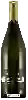
Winery SeehofHuxelrebe Spätlese Westhofener Rotenstein
 White wine


This wine generally goes well with
Details and technical informations about Winery Seehof's Huxelrebe Spätlese Westhofener Rotenstein.
Discover the grape variety: Negro Aramo
Its country of origin is Greece - it is related to the Greek xynomavro grape variety - and it has been cultivated for a long time in southern Italy, particularly in the southern region of Puglia, although it is known throughout the country. It should not be confused with aglianico, with which it has some synonyms. It should be noted that there is an early Negro Aramo clone. We can also meet the Negro Aramo in England, Australia, New Zealand, the United States (California, ...), ... in France it is almost unknown.
Last vintages of this wine
The best vintages of Huxelrebe Spätlese Westhofener Rotenstein from Winery Seehof are 0
Informations about the Winery Seehof
The Winery Seehof is one of of the world's great estates. It offers 72 wines for sale in the of Westhofen to come and discover on site or to buy online.

The wine region of Westhofen
The wine region of Westhofen is located in the region of Rheinhessen of Germany. Wineries and vineyards like the Domaine Seehof or the Domaine Seehof produce mainly wines white, sweet and sparkling. The most planted grape varieties in the region of Westhofen are Riesling et Scheurebe, they are then used in wines in blends or as a single variety. On the nose of Westhofen often reveals types of flavors of earth, microbio or oak and sometimes also flavors of tree fruit, citrus fruit or tropical fruit.
The wine region of Rheinhessen
Rheinhessen is Germany's largest region for producing the quality wines of the Qualitätswein bestimmter Anbaugebiete (QbA) and Prädikatswein designations, with roughly 26,500 hectares (65,000 acres) of Vineyard">Vineyards as of 2014. Many of its most significant viticultural areas are favorably influenced by the Rhine river, which runs aLong its North and eastern borders. The Rhine, along with the Nahe river to the west and the Haardt mountains to its South, form a natural border. Rheinhessen covers an area south of Rheingau, north of Pfalz and east of Nahe, and is located within the Rhineland-Palatinate federal state.
The word of the wine: Tartar (deposit)
White, chalky deposits that occur as a result of precipitation inside bottles and are often considered by consumers as a defect. They are in fact tartaric salts formed by tartaric acid, potassium and calcium naturally present in the wine. This deposit does not alter the quality of the wine and can be eliminated by a simple decanting.