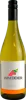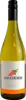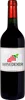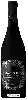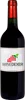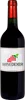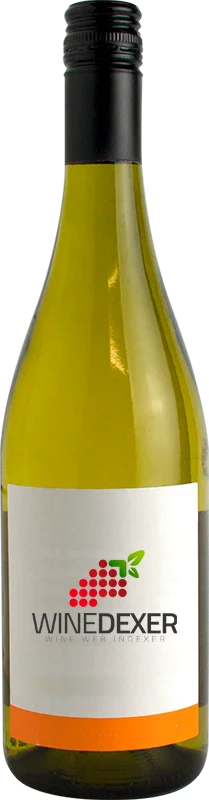
Winery SchwarzWeiss Cuvée
 White wine


This wine generally goes well with
Details and technical informations about Winery Schwarz's Weiss Cuvée.
Discover the grape variety: Tinto cão
- Origin : Most certainly from the north of Portugal, it is a very old grape variety, present for a very long time in the Douro Valley where it is very often associated with other grape varieties to produce the famous Port. It can also be found in the United States (California, etc.), Australia, Spain, Mexico, etc.
Last vintages of this wine

The best vintages of Weiss Cuvée from Winery Schwarz are 2015, 2017, 0, 2013
Informations about the Winery Schwarz
The Winery Schwarz is one of of the world's great estates. It offers 32 wines for sale in the of Burgenland to come and discover on site or to buy online.

The wine region of Burgenland
Burgenland is a large wine-producing region on the eastern border of Austria. Despite the country's image as the producer of some of the world's finest white wines, Austria is also home to a thriving red wine culture: Burgenland, with its sunny, continental summers, is the country's key red wine region, with its wines based mainly on the Blaufränkisch and Zweigelt grape varieties. Sweet, botrytized wines are also a specialty of the region, particularly in the Terroir surrounding the Neusiedlersee lake. The region occupies a narrow strip of land that runs from the Danube River down to Steiermark in the South.
The wine region of Weinland
Weinviertel DAC – whose name translates as "wine quarter" – is an appellation in Niederösterreich (Lower Austria). It is by far the largest Districtus Austriae Controllatus wine region in Austria. It was also the first Austrian wine region to be given that title, in 2002, with a DAC Reserve designation added in 2009. The designation applies only to white wines from the Grüner Veltliner Grape variety.
The word of the wine: Deposit
Solid particles that can naturally coat the bottom of a bottle of wine. It is rather a guarantee that the wine has not been mistreated: in fact, to avoid the natural deposit, rather violent processes of filtration or cold passage (- 7 or - 8 °C) are used in order to precipitate the tartar (the small white crystals that some people confuse with crystallized sugar: just taste to dissuade you from it)