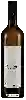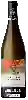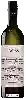
Winery SattlerhofPfarrweingarten Grauburgunder
 White wine


In the mouth this white wine is a powerful.
This wine generally goes well with pork, cured meat or mushrooms.
The Pfarrweingarten Grauburgunder of the Winery Sattlerhof is in the top 90 of wines of Südsteiermark.
Taste structure of the Pfarrweingarten Grauburgunder from the Winery Sattlerhof
Light | Bold | |
Dry | Sweet | |
Soft | Acidic |
In the mouth the Pfarrweingarten Grauburgunder of Winery Sattlerhof in the region of Steirerland is a powerful.
Wine flavors and olphactive analysis



On the nose the Pfarrweingarten Grauburgunder of Winery Sattlerhof in the region of Steirerland often reveals types of flavors of non oak, oak.
Food and wine pairings with Pfarrweingarten Grauburgunder
Pairings that work perfectly with Pfarrweingarten Grauburgunder



Original food and wine pairings with Pfarrweingarten Grauburgunder

The Pfarrweingarten Grauburgunder of Winery Sattlerhof matches generally quite well with dishes of pork, spicy food or mushrooms such as recipes of leek, goat cheese and bacon quiche, mussels with curry or bernard's potée.
Details and technical informations about Winery Sattlerhof's Pfarrweingarten Grauburgunder.
Discover the grape variety: Syrah
No one can agree on the origin of Syrah, the black grape variety found today in the Rhône Valley, Provence, Languedoc-Roussillon and southwestern France. Several legends speak of its possible origin in Sicily, Persia or Syria. Tests have finally revealed that it originated in the northern Côtes du Rhône valley. Syrah is a fragile grape variety, which fears drought and is susceptible to disease. Its long shoots are not very resistant to the mistral, which is why they are often tied up or cut short. It needs soil rich in trace elements to feed itself. In these conditions, it produces bunches of beautiful bluish-black grapes with medium-sized berries and sweet, spicy juice. Its red wines are deep in colour, with fruity, spicy and floral aromatic complexity and tannins that structure the whole. With little acidity, they are rather full-bodied and have a high alcohol content. Syrah also makes fruity rosé wines, which are pleasant and have a nice finesse.vinified on its own, Syrah is the only red grape variety of the AOC Cornas and is the majority in the AOC Côte-Rôtie and Hermitage. It is also recommended in the Côtes-du-Vallée du Rhône, Saint-Joseph and Châteauneuf-du-Pape appellations. Finally, the AOCs Palette, Baux-de-Provence, Corbières, Côtes-du-Roussillon, Fronton... also produce it. Today, Syrah is a grape variety that is constantly increasing in surface area throughout the world. It is growing in Italy, Australia, South Africa, Argentina and Mexico.
Last vintages of this wine
The best vintages of Pfarrweingarten Grauburgunder from Winery Sattlerhof are 2013, 0, 2015
Informations about the Winery Sattlerhof
The Winery Sattlerhof is one of of the world's great estates. It offers 31 wines for sale in the of Südsteiermark to come and discover on site or to buy online.

The wine region of Südsteiermark
The wine region of Südsteiermark is located in the region of Steiermark of Steirerland of Austria. We currently count 170 estates and châteaux in the of Südsteiermark, producing 1220 different wines in conventional, organic and biodynamic agriculture. The wines of Südsteiermark go well with generally quite well with dishes .
The wine region of Steirerland
Steiermark, or Styria, is the southernmost wine producing region in Austria, based around the city of Graz and stretching out towards the border with Slovenia. The hilly terrain and the region's cool take on the MediterraneanClimate mean that viticulture here is markedly different from the rest of Austria. Steiermark's specialties include Sauvignon Blanc, wines made from the Traminer family and Schiclher, a rustic local rosé made from Blauer Wildbacher. Hardonnay">Chardonnay (often labeled "Morillon"), Weissburgunder and Welschriesling are other important varieties grown here.
The word of the wine: Hygrometry
Humidity level of the cellar necessary for a good ageing of the wines. The recommended hygrometry is around 70% in order to guarantee a good elasticity of the corks while preserving the labels.