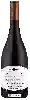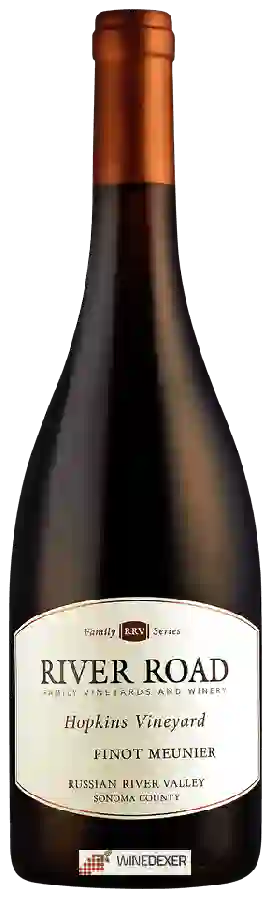
Winery River RoadHopkins Vineyard Pinot Meunier
 Red wine


This wine generally goes well with
The Hopkins Vineyard Pinot Meunier of the Winery River Road is in the top 30 of wines of Russian River Valley.

Wine flavors and olphactive analysis



On the nose the Hopkins Vineyard Pinot Meunier of Winery River Road in the region of California often reveals types of flavors of non oak, earth or oak and sometimes also flavors of spices, red fruit or black fruit.
Details and technical informations about Winery River Road's Hopkins Vineyard Pinot Meunier.
Discover the grape variety: Blauburgunder
Elegant, structured reds with a clear to deep ruby colour, silky tannins and a smooth palate, showing signature aromas of red fruits (cherry, raspberry, strawberry), forest floor, mushroom, gentle spices and vanilla from oak ageing. Good ageing potential. Produces great wines in German-speaking regions — Germany (Baden-Württemberg, Palatinate), Austria, northern Italy (Südtirol) and German-speaking Switzerland. German and Austrian synonym for Pinot Noir.
Last vintages of this wine
The best vintages of Hopkins Vineyard Pinot Meunier from Winery River Road are 2012, 2011, 0
Informations about the Winery River Road
The Winery River Road is one of of the world's great estates. It offers 34 wines for sale in the of Russian River Valley to come and discover on site or to buy online.

The wine region of Russian River Valley
Cool climate ideal for elegant Pinot Noir and balanced Chardonnay: fine, silky reds with aromas of cherry, raspberry, undergrowth and sweet spice, fine acidity and velvety tannins. Textured Chardonnay with notes of apple, citrus and butter, measured oak. Also gourmet Zinfandels and traditional-method sparklers. Sonoma AVA cooled by the Pacific fog of the Petaluma Gap, alluvial and volcanic soils.
The wine region of California
Powerful, sunny reds: dense Napa Cabernet Sauvignon (blackcurrant, chocolate, tobacco, ample tannins), spicy, jammy Zinfandel from the Sierra Foothills, silky red-fruited Pinot Noir on the cool coast (Sonoma, Russian River, Central Coast). Opulent, buttery Chardonnay, notes of yellow fruit and vanilla. Varied climate, from the hot interior to the Pacific-cooled coast. 80% of US production, 139 AVAs including Napa (1st AVA, 1981).
The word of the wine: Breton
See cabernet franc.