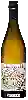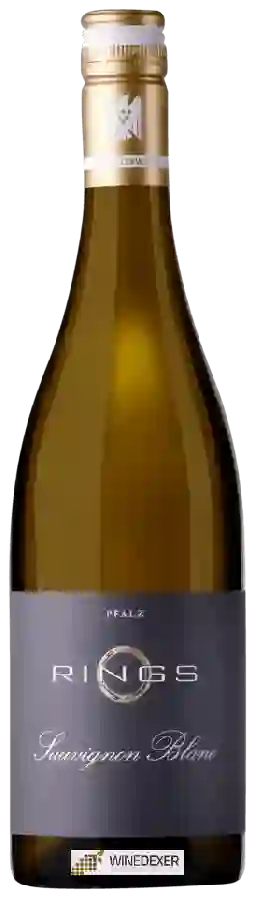
Winery RingsSauvignon Blanc
 White wine



In the mouth this white wine is a with a nice freshness.
This wine generally goes well with vegetarian, shellfish or goat cheese.

Taste structure of the Sauvignon Blanc from the Winery Rings
Light | Bold | |
Dry | Sweet | |
Soft | Acidic |
In the mouth the Sauvignon Blanc of Winery Rings in the region of Pfalz is a with a nice freshness.
Wine flavors and olphactive analysis


On the nose the Sauvignon Blanc of Winery Rings in the region of Pfalz often reveals types of flavors of earth, tropical fruit.
Food and wine pairings with Sauvignon Blanc
Pairings that work perfectly with Sauvignon Blanc


Original food and wine pairings with Sauvignon Blanc
The Sauvignon Blanc of Winery Rings matches generally quite well with dishes of shellfish, vegetarian or goat cheese such as recipes of spanish seafood paella, quiche with leeks and fresh salmon from flo or puff pastry with ratatouille and goat cheese.
Details and technical informations about Winery Rings's Sauvignon Blanc.
Discover the grape variety: Weissburgunder
Elegant, full-bodied dry whites with a pale golden color, ample palate and preserved fresh acidity, offering refined aromas of white fruits (apple, pear), almond, hazelnut, white flowers (acacia) and mineral notes (limestone, flint). Fine barrel-ageing and cellaring potential. Star of great German-speaking whites: Baden VDP, Palatinate VDP, Wachau DAC, Alto Adige DOC (as pinot bianco). German synonym for pinot blanc, a white-skinned mutation of pinot noir.
Last vintages of this wine
The best vintages of Sauvignon Blanc from Winery Rings are 2019, 2018, 0, 2017
Informations about the Winery Rings
The Winery Rings is one of of the world's great estates. It offers 79 wines for sale in the of Pfalz to come and discover on site or to buy online.

The wine region of Pfalz
Fleshy, dry, fruity Riesling is the region's signature: yellow peach, apricot, ripe citrus, lovely mineral tension. Germany's largest red-wine area (40%), with silky Spätburgunder showing red fruit and spice, darker structured Dornfelder, supple Portugieser. Some rounded Pinot Blanc and Pinot Gris. A 23,640 ha vineyard along the Haardt, among Germany's warmest (>2,000 h of sun).
The word of the wine: Large plant
See crazy white woman.