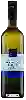
Winery Residenz BechtelRotling Spätlese
 Pink wine
This wine generally goes well with vegetarian
Food and wine pairings with Rotling Spätlese
Pairings that work perfectly with Rotling Spätlese

Original food and wine pairings with Rotling Spätlese
The Rotling Spätlese of Winery Residenz Bechtel matches generally quite well with dishes of vegetarian such as recipes of broccoli and blue cheese quiche without pastry.
Details and technical informations about Winery Residenz Bechtel's Rotling Spätlese.
Discover the grape variety: Scheurebe
German grape variety obtained in 1916 by Georg Shere (1879/1949). It was given until then as coming from a cross between Riesling and Sylvaner, but genetic tests have shown that its father is the Bouquettraube (Bukettrebe), and it is closely related to the Kerner. The Scheurebe can be found in Austria, Germany, Belgium, Switzerland, the Netherlands, Italy, Slovenia, Great Britain, the United States (California, Virginia, ...), Canada (Ontario, British Columbia, ...), ... practically unknown in France.
Informations about the Winery Residenz Bechtel
The Winery Residenz Bechtel is one of of the world's great estates. It offers 25 wines for sale in the of Rheinhessen to come and discover on site or to buy online.

The wine region of Rheinhessen
Rheinhessen is Germany's largest region for producing the quality wines of the Qualitätswein bestimmter Anbaugebiete (QbA) and Prädikatswein designations, with roughly 26,500 hectares (65,000 acres) of Vineyard">Vineyards as of 2014. Many of its most significant viticultural areas are favorably influenced by the Rhine river, which runs aLong its North and eastern borders. The Rhine, along with the Nahe river to the west and the Haardt mountains to its South, form a natural border. Rheinhessen covers an area south of Rheingau, north of Pfalz and east of Nahe, and is located within the Rhineland-Palatinate federal state.
The word of the wine: Bordeaux futures
Bordeaux wines are expected 2 to 3 years before bottling. In the spring following the harvest, the wines are offered by the châteaux to the Bordeaux wine merchants via the brokers.