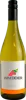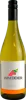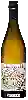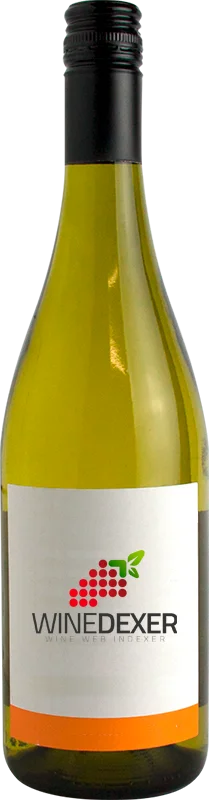
Winery PfeffingenScheurebe Spätlese
 White wine



This wine generally goes well with
Wine flavors and olphactive analysis





On the nose the Scheurebe Spätlese of Winery Pfeffingen in the region of Pfalz often reveals types of flavors of non oak, earth or microbio and sometimes also flavors of oak, tree fruit or citrus fruit.
Details and technical informations about Winery Pfeffingen's Scheurebe Spätlese.
Discover the grape variety: Scheurebe
German grape variety obtained in 1916 by Georg Shere (1879/1949). It was given until then as coming from a cross between Riesling and Sylvaner, but genetic tests have shown that its father is the Bouquettraube (Bukettrebe), and it is closely related to the Kerner. The Scheurebe can be found in Austria, Germany, Belgium, Switzerland, the Netherlands, Italy, Slovenia, Great Britain, the United States (California, Virginia, ...), Canada (Ontario, British Columbia, ...), ... practically unknown in France.
Last vintages of this wine
The best vintages of Scheurebe Spätlese from Winery Pfeffingen are 2012, 0
Informations about the Winery Pfeffingen
The Winery Pfeffingen is one of of the world's great estates. It offers 67 wines for sale in the of Pfalz to come and discover on site or to buy online.

The wine region of Pfalz
Pfalz is a key wine producing region in western Germany, located between the Rhein/Rhine river and the low-lying Haardt mountain range (a natural continuation of the Alsatian Vosges). It covers a rectangle of land 45 miles (75km) Long and 15 miles (25km) wide. To the NorthLiesRheinhessen; to the South, the French border and Alsace. In terms of both quality and quantity, Pfalz is one of Germany's most important regions, and one which shows great promise for the future.
The word of the wine: Tanin
A natural compound contained in the skin of the grape, the seed or the woody part of the bunch, the stalk. The maceration of red wines allows the extraction of tannins, which give the texture, the solidity and also the mellowness when the tannins are "ripe". The winemaker seeks above all to extract the tannins from the skin, the ripest and most noble. The tannins of the seed or stalk, which are "greener", especially in average years, give the wine hardness and astringency. The wines of Bordeaux (based on Cabernet and Merlot) are full of tannins, those of Burgundy much less so, with Pinot Noir containing little.