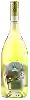
Winery PenfoldsCellar Reserve Fiano
 White wine



This wine generally goes well with
Wine flavors and olphactive analysis



On the nose the Cellar Reserve Fiano of Winery Penfolds in the region of Australie du Sud often reveals types of flavors of pineapple, tropical or citrus and sometimes also flavors of guava, microbio or citrus fruit.
Details and technical informations about Winery Penfolds's Cellar Reserve Fiano.
Discover the grape variety: Ugni blanc et rose
Italian origin most certainly, more precisely from Tuscany. It is registered in the Official Catalogue of wine grape varieties list A1. Published genetic analysis has revealed that it is related to the vermentino and for more details click here!
Last vintages of this wine
The best vintages of Cellar Reserve Fiano from Winery Penfolds are 2016, 2017
Informations about the Winery Penfolds
The Winery Penfolds is one of of the world's great estates. It offers 198 wines for sale in the of McLaren Vale to come and discover on site or to buy online.

The wine region of McLaren Vale
The wine region of McLaren Vale is located in the region of Fleurieu of Australie du Sud of Australia. We currently count 599 estates and châteaux in the of McLaren Vale, producing 2626 different wines in conventional, organic and biodynamic agriculture. The wines of McLaren Vale go well with generally quite well with dishes .
The wine region of Australie du Sud
SouthAustralia is one of Australia's six states, located (as the name suggests) in the south of the vast island continent. It's the engine room of the Australian wine industry, responsible for about half of the country's total production each year. But there's more to the region than quantity - countless high-quality wines are produced here, most from the region's signature Grape, Shiraz. These include such fine, collectible wines as Penfolds Grange, Henschke Hill of Grace, Torbreck The Laird and d'Arenberg The Dead Arm.
The word of the wine: Performance
Quantity of grapes harvested per hectare. In AOC, the average yield is limited on the proposal of the appellation syndicate, validated by the Inao. The use of high-performance plant material (especially clones) and better control of vine diseases have increased yields. This is not without consequences on the quality of the wines (dilution) and on the state of the market (too much wine). We must not over-simplify: low yields are not synonymous with quality, and it is often in years with generous harvests that we find the greatest vintages (1982 and 1986 in Bordeaux, 1996 in Champagne, 1990 and 2005 in Burgundy...).