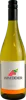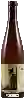
Winery StrengSulzfelder Cyriakusberg Silvaner Trocken
 White wine
In the mouth this white wine is a with a nice freshness.
This wine generally goes well with pork, vegetarian or poultry.
Taste structure of the Sulzfelder Cyriakusberg Silvaner Trocken from the Winery Streng
Light | Bold | |
Dry | Sweet | |
Soft | Acidic |
In the mouth the Sulzfelder Cyriakusberg Silvaner Trocken of Winery Streng in the region of Franken is a with a nice freshness.
Food and wine pairings with Sulzfelder Cyriakusberg Silvaner Trocken
Pairings that work perfectly with Sulzfelder Cyriakusberg Silvaner Trocken



Original food and wine pairings with Sulzfelder Cyriakusberg Silvaner Trocken


The Sulzfelder Cyriakusberg Silvaner Trocken of Winery Streng matches generally quite well with dishes of veal, pork or vegetarian such as recipes of duck breast with black figs, ham croquette with purée or quiche lorraine.
Details and technical informations about Winery Streng's Sulzfelder Cyriakusberg Silvaner Trocken.
Discover the grape variety: Rolle
Rolle is a white grape variety of Turkish origin that has become established in the South of France, particularly in the Var region, in Corsica under the name of Vermentinu, and in Italy. Its bunches and berries, of medium size, change from white to pink when the grapes are ripe. The rolle likes hot climates where the soil is dry and poor. On the other hand, it fears the wind and diseases. It produces fat, well-balanced white wines. These wines may lack acidity, but they are still very aromatic and give off notes of grapefruit, white fruit, white flowers, fennel, etc. Rolle is also a good table grape that can be enjoyed both fresh and dry. Present in Provence, Languedoc, Roussillon and Corsica. It is used in the composition of numerous appellations such as Ajaccio, Patrimonio, Bandol, Coteaux-d'Aix-en-Provence, Côtes-de-Provence, Costières-de-Nîmes, Corbières, Collioure, Côtes-de-Roussillon, Minervois, Saint Chinian...
Informations about the Winery Streng
The Winery Streng is one of of the world's greatest estates. It offers 10 wines for sale in the of Franken to come and discover on site or to buy online.

The wine region of Franken
Franken, or Franconia in English, is a wine-growing region in the northwest of Germany's historic state of Bavaria. Though Bavaria may be more famous for its beer, Franken boasts a proud viticultural tradition and is one of the most unique regions in the country. There are just over 6,100 hectares (15,073 ac) of vines Planted in Franken and around 80 percent of these are white Grape varieties. Here, Riesling plays second fiddle to the often overlooked Silvaner and Müller-Thurgau.
The word of the wine: White winemaking
White wines are obtained by fermentation of the juice after pressing. A pre-fermentation maceration is sometimes practiced to extract the aromatic substances from the skins. White wines are normally made from white grapes, but can also be made from red grapes (blanc de noirs). The grapes are then pressed as soon as they arrive at the vat house without maceration in order to prevent the colouring matter contained in the skins from "staining" the wine.