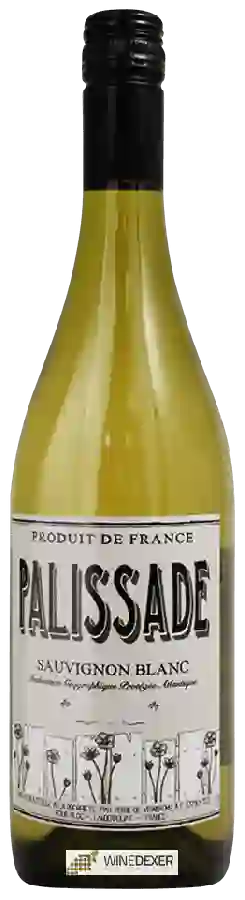
Winery PalissadeSauvignon Blanc
 White wine



This wine generally goes well with vegetarian, rich fish (salmon, tuna etc) or shellfish.
Wine flavors and olphactive analysis



On the nose the Sauvignon Blanc of Winery Palissade in the region of Atlantique often reveals types of flavors of grapefruit, citrus or butter and sometimes also flavors of green apple, lemon or microbio.
Food and wine pairings with Sauvignon Blanc
Pairings that work perfectly with Sauvignon Blanc



Original food and wine pairings with Sauvignon Blanc
The Sauvignon Blanc of Winery Palissade matches generally quite well with dishes of rich fish (salmon, tuna etc), shellfish or vegetarian such as recipes of tuna flan with leek coulis, fish and shrimp curry or nanie's diced ham quiche.
Details and technical informations about Winery Palissade's Sauvignon Blanc.
Discover the grape variety: Viktoria
Cross between a (vitis vinifera x vitis amurensis) and Seyve Villard 12 304. Viktoria is found mainly in Russia but also in Poland, Lithuania, etc. It should be noted that a Romanian variety of table grape bears the same name but it is unlikely to be confused with it because its berries are white. - Synonymy: victoria, wiktoria (for all the synonyms of the varieties, click here!).
Last vintages of this wine
The best vintages of Sauvignon Blanc from Winery Palissade are 2013, 2015, 2014, 2016 and 2017.
Informations about the Winery Palissade
The Winery Palissade is one of of the world's greatest estates. It offers 4 wines for sale in the of Atlantique to come and discover on site or to buy online.

The wine region of Atlantique
The regional name of Vin de pays de l'Atlantique exists since 2006. For red, rosé and white wines, it brings together 76 producer and Cellar members in Gironde, Dordogne and other departments of Poitou and Aquitaine, for a production of 39. 500 hectolitres of wine, 62% of which is red wine. This denomination is a complement of range of the AOC of Bordeaux.
The word of the wine: Yeast
Micro-organisms at the base of all fermentative processes. A wide variety of yeasts live and thrive naturally in the vineyard, provided that treatments do not destroy them. Unfortunately, their replacement by laboratory-selected yeasts is often the order of the day and contributes to the standardization of the wine. Yeasts are indeed involved in the development of certain aromas.