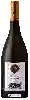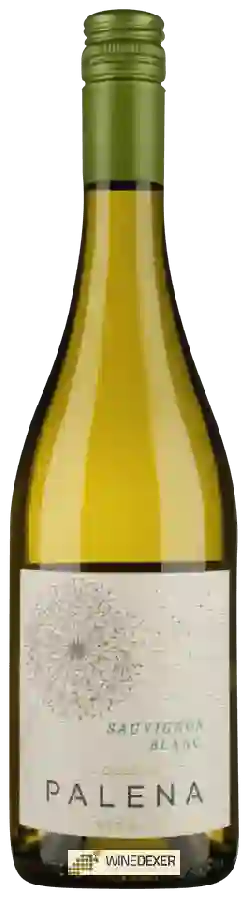
Winery PalenaSauvignon Blanc
 White wine



In the mouth this white wine is a with a nice freshness.
This wine generally goes well with vegetarian, shellfish or goat cheese.
Taste structure of the Sauvignon Blanc from the Winery Palena
Light | Bold | |
Dry | Sweet | |
Soft | Acidic |
In the mouth the Sauvignon Blanc of Winery Palena in the region of Central Valley is a with a nice freshness.
Food and wine pairings with Sauvignon Blanc
Pairings that work perfectly with Sauvignon Blanc



Original food and wine pairings with Sauvignon Blanc
The Sauvignon Blanc of Winery Palena matches generally quite well with dishes of shellfish, vegetarian or goat cheese such as recipes of fish and shrimp wok with curry, quiche without pastry, courgette and blue cheese or courgettes with goat cheese au gratin.
Details and technical informations about Winery Palena's Sauvignon Blanc.
Discover the grape variety: Saint Côme
A very old variety grown in Aveyron, it has almost disappeared from the vineyard. It is registered in the Official Catalogue of wine grape varieties, list A1. According to published genetic analyses, it is the result of a natural cross between the white gouais and the moural - or morrastel -. For more information on other relatives, click here !
Last vintages of this wine
The best vintages of Sauvignon Blanc from Winery Palena are 2017, 0, 2018
Informations about the Winery Palena
The Winery Palena is one of of the world's greatest estates. It offers 14 wines for sale in the of Central Valley to come and discover on site or to buy online.

The wine region of Central Valley
The Central Valley (El Valle Central) of Chile is one of the most important wine-producing areas in South America in terms of Volume. It is also one of the largest wine regions, stretching from the Maipo Valley (just south of Santiago) to the southern end of the Maule Valley. This is a distance of almost 250 miles (400km) and covers a number of Climate types. The Central Valley wine region is easily (and often) confused with the geological Central Valley, which runs north–south for more than 620 miles (1000km) between the Pacific Coastal Ranges and the lower Andes.
The word of the wine: Physiological maturity
The stage of ripeness of the grape berry when it has reached an optimal weight and when the sugar and acidity levels have stabilized.