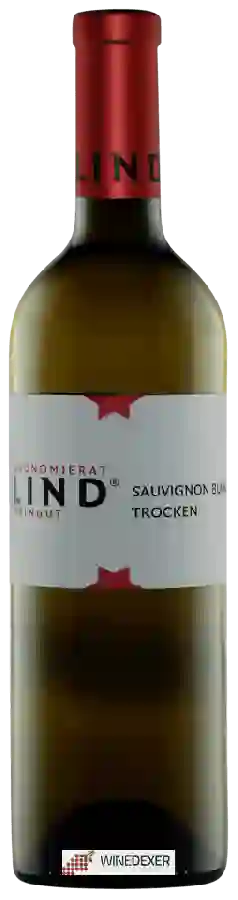
Winery Ökonomierat LindSauvignon Blanc Trocken
 White wine
In the mouth this white wine is a with a nice freshness.
This wine generally goes well with vegetarian, shellfish or goat cheese.
Taste structure of the Sauvignon Blanc Trocken from the Winery Ökonomierat Lind
Light | Bold | |
Dry | Sweet | |
Soft | Acidic |
In the mouth the Sauvignon Blanc Trocken of Winery Ökonomierat Lind in the region of Pfalz is a with a nice freshness.
Wine flavors and olphactive analysis

Food and wine pairings with Sauvignon Blanc Trocken
Pairings that work perfectly with Sauvignon Blanc Trocken



Original food and wine pairings with Sauvignon Blanc Trocken
The Sauvignon Blanc Trocken of Winery Ökonomierat Lind matches generally quite well with dishes of shellfish, vegetarian or goat cheese such as recipes of shrimp in coconut milk curry, quiche without pastry or quiche with chard leaves, fresh goat cheese and pine nuts.
Details and technical informations about Winery Ökonomierat Lind's Sauvignon Blanc Trocken.
Discover the grape variety: Okuzgozu
This grape variety is native to Turkey, where it is very well known and highly appreciated. In this country, it is very often grown at high altitudes, sometimes 1,000 metres or more. It is virtually unknown in France and in other wine-producing countries.
Informations about the Winery Ökonomierat Lind
The Winery Ökonomierat Lind is one of of the world's great estates. It offers 39 wines for sale in the of Pfalz to come and discover on site or to buy online.

The wine region of Pfalz
Pfalz is a key wine producing region in western Germany, located between the Rhein/Rhine river and the low-lying Haardt mountain range (a natural continuation of the Alsatian Vosges). It covers a rectangle of land 45 miles (75km) Long and 15 miles (25km) wide. To the NorthLiesRheinhessen; to the South, the French border and Alsace. In terms of both quality and quantity, Pfalz is one of Germany's most important regions, and one which shows great promise for the future.
The word of the wine: Premier cru
In Burgundy, third level of classification (above the regional and communal appellations), designating the wines produced on delimited parcels (climats) whose name is added to the communal appellation. The climats classified as first growths are 635.