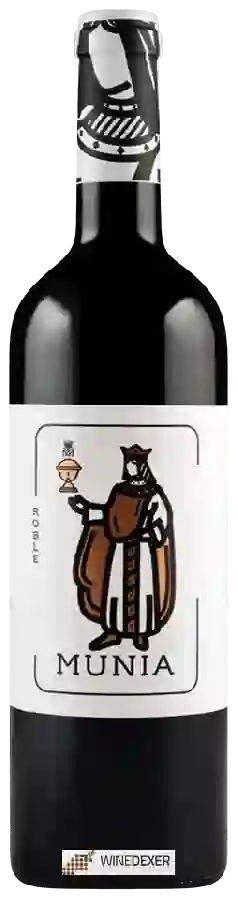
Winery MuniaRoble
 Red wine



In the mouth this red wine is a powerful with a lot of tannins present in the mouth.
This wine generally goes well with beef, game (deer, venison) or lamb.
Taste structure of the Roble from the Winery Munia
Light | Bold | |
Smooth | Tannic | |
Dry | Sweet | |
Soft | Acidic |
In the mouth the Roble of Winery Munia in the region of Castille-et-Léon is a powerful with a lot of tannins present in the mouth.
Wine flavors and olphactive analysis




On the nose the Roble of Winery Munia in the region of Castille-et-Léon often reveals types of flavors of non oak, earth or oak and sometimes also flavors of spices, red fruit or black fruit.
Food and wine pairings with Roble
Pairings that work perfectly with Roble



Original food and wine pairings with Roble
The Roble of Winery Munia matches generally quite well with dishes of beef, lamb or game (deer, venison) such as recipes of celine's version of moussaka (5th meeting), lamb collar with mustard or duck breast with honey, potato and onion with garlic.
Details and technical informations about Winery Munia's Roble.
Discover the grape variety: Chenin blanc
It most certainly originates from the Anjou region and is registered in the official catalogue of wine grape varieties on the A1 list. It can also be found in South Africa, Australia, Argentina, Chile, the United States (California), New Zealand, etc. It is said to be a descendant of Savagnin and to have sauvignonasse as its second parent (Jean-Michel Boursiquot 2019). On the other hand, Chenin blanc is the half-brother of verdelho and sauvignon blanc and is the father of colombard.
Last vintages of this wine
The best vintages of Roble from Winery Munia are 2010, 2017, 2018, 2016 and 2012.
Informations about the Winery Munia
The Winery Munia is one of of the world's greatest estates. It offers 7 wines for sale in the of Toro to come and discover on site or to buy online.

The wine region of Toro
The wine region of Toro is located in the region of Castille-et-Léon of Spain. Wineries and vineyards like the Domaine Teso La Monja or the Domaine Teso La Monja produce mainly wines red, white and sweet. The most planted grape varieties in the region of Toro are Tempranillo, Verdejo and Pinot gris, they are then used in wines in blends or as a single variety. On the nose of Toro often reveals types of flavors of cherry, espresso or black olive and sometimes also flavors of menthol, bramble or cigar box.
The wine region of Castille-et-Léon
Located in the northern half of the Central Iberian plateau, Castilla y León is the largest of Spain's 17 administrative regions, covering about one-fifth of the country's total area. It extends about 350 kilometres (220 miles) from central Spain to the northern coast. Just as wide, it connects the Rioja wine region to the Portuguese border. Red wines reign supreme in Castilla y León, and the Tempranillo grape is undoubtedly the king.
The word of the wine: Concentrate
Said of a wine that is rich in all its components (sugars in sweet wines, tannins in red wines, aromatic compounds) and that leaves an impression of density, intensity and depth.