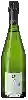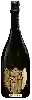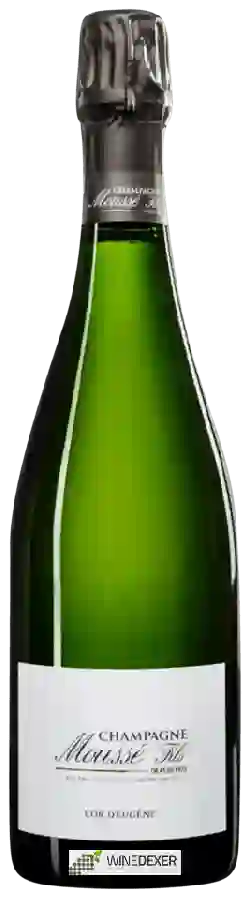
Winery Moussé Filsl'Or d'Eugene Blanc de Noir Solera
 Sparkling wine


This wine is composed of 100% of the grape variety Pinot Meunier.
This wine generally goes well with pork, poultry or veal.

Wine flavors and olphactive analysis






On the nose the l'Or d'Eugene Blanc de Noir Solera of Winery Moussé Fils in the region of Champagne often reveals types of flavors of cream, citrus or apples and sometimes also flavors of green apple, minerality or lemon.
Food and wine pairings with l'Or d'Eugene Blanc de Noir Solera
Pairings that work perfectly with l'Or d'Eugene Blanc de Noir Solera



Original food and wine pairings with l'Or d'Eugene Blanc de Noir Solera


The l'Or d'Eugene Blanc de Noir Solera of Winery Moussé Fils matches generally quite well with dishes of veal, pork or game (deer, venison) such as recipes of bacon and mushroom tagliatelle, the garbure or rabbit with mustard in a casserole.
Details and technical informations about Winery Moussé Fils's l'Or d'Eugene Blanc de Noir Solera.
Discover the grape variety: Pinot noir
Elegant reds, light in colour with silky tannins, showing strawberry, cherry and raspberry aromas, evolving to forest floor, mushroom and spice with age. Fresh acidity, delicate finish. Star of the Côte d'Or (Romanée-Conti, Chambertin, Volnay), pillar of Champagne (Blanc de Noirs) and signature of Oregon, Central Otago and Sonoma Coast. An early-ripening Burgundian variety, one of the world's greatest.
Last vintages of this wine
The best vintages of l'Or d'Eugene Blanc de Noir Solera from Winery Moussé Fils are 2011, 2016, 2017
Informations about the Winery Moussé Fils
The Winery Moussé Fils is one of of the world's greatest estates. It offers 31 wines for sale in the of Champagne to come and discover on site or to buy online.

The wine region of Champagne
World benchmark sparkling wines: fine bubbles, citrusy tension, notes of brioche, toasted almond, white flowers and white-fleshed fruits after ageing on lees. Three grapes blended or solo: fleshy Pinot Noir (38%), fruity Meunier (33%), chiselled Chardonnay (28%). From straight Blanc de Blancs to vinous Blanc de Noirs, from non-vintage Brut to age-worthy Millésimé. AOC since 1927, 34,300 ha on chalk, 17 Grands Crus and 44 Premiers Crus.
The word of the wine: Vegetative cycle
All the different phases of the vine's development: winter rest period, budburst, inflorescence, flowering, fruit set, veraison, ripening.