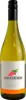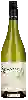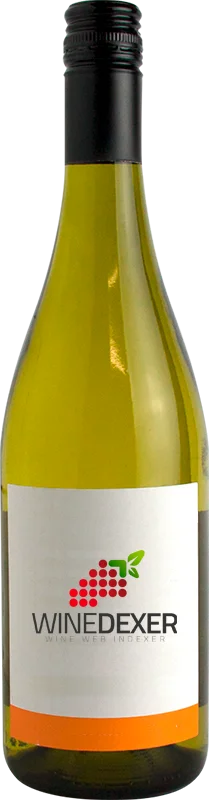
Winery Monte BlancoSauvignon Blanc
 White wine


In the mouth this white wine is a with a nice freshness.
This wine generally goes well with vegetarian, shellfish or goat cheese.

Taste structure of the Sauvignon Blanc from the Winery Monte Blanco
Light | Bold | |
Dry | Sweet | |
Soft | Acidic |
In the mouth the Sauvignon Blanc of Winery Monte Blanco in the region of Central Valley is a with a nice freshness.
Food and wine pairings with Sauvignon Blanc
Pairings that work perfectly with Sauvignon Blanc



Original food and wine pairings with Sauvignon Blanc
The Sauvignon Blanc of Winery Monte Blanco matches generally quite well with dishes of shellfish, vegetarian or goat cheese such as recipes of cuttlefish rust, ham and comté quiche or croque monsieur with sunny vegetables.
Details and technical informations about Winery Monte Blanco's Sauvignon Blanc.
Discover the grape variety: Calabrese di Montenuovo
Light, simple reds with a clear ruby robe, smooth tannins and an airy palate with preserved acidity. Signature aromas of red fruits (cherry, raspberry), soft spices and fresh floral notes from Campania. Rustic, airy profile, nearly extinct. Conserved in heritage vineyards for its exceptional genetic and patrimonial value. Rare native Italian black grape from Campania, genetically identified as the mother of Sangiovese (father: Ciliegiolo).
Last vintages of this wine
The best vintages of Sauvignon Blanc from Winery Monte Blanco are 2020, 2019, 2018, 0 and 2017.
Informations about the Winery Monte Blanco
The Winery Monte Blanco is one of of the world's greatest estates. It offers 9 wines for sale in the of Rapel Valley to come and discover on site or to buy online.

The wine region of Rapel Valley
Vast central Chilean valley, ~25% of national output. Carmenère, emblem of Chile: dense reds with signature notes of blackberry, plum, green pepper, coffee, cocoa and spice, round tannins — a grape rediscovered here in 1994. Also firm Cabernet Sauvignon (blackcurrant, eucalyptus), supple Merlot, peppery Syrah. Encompasses Cachapoal to the north (cooler, higher altitude) and Colchagua to the south (warm, fleshy stars).
The wine region of Central Valley
Heart of modern Chilean wine: structured, sunny reds, dense, blackcurranty Cabernet Sauvignon from Maipo (Chilean cradle of the grape), signature Carménère with notes of ripe pepper, black fruit and sweet spices from Colchagua, supple Merlot and deep Syrah. Round Chardonnay whites and lively, sharp Sauvignon. Mediterranean climate, 400 km between Andes and Pacific. Star sub-regions: Maipo, Cachapoal, Colchagua, Curicó, Maule.
The word of the wine: Marcottage
A vine reproduction technique that consists of burying a vine shoot that takes root and reproduces a plant with the same characteristics as the vine to which it is attached (synonym: provignage).