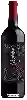
Winery Moment de PlaisirRouge
 Red wine


In the mouth this red wine is a powerful with a nice balance between acidity and tannins.
This wine generally goes well with beef, veal or pasta.

Taste structure of the Rouge from the Winery Moment de Plaisir
Light | Bold | |
Smooth | Tannic | |
Dry | Sweet | |
Soft | Acidic |
In the mouth the Rouge of Winery Moment de Plaisir in the region of Pays d'Oc is a powerful with a nice balance between acidity and tannins.


Food and wine pairings with Rouge
Pairings that work perfectly with Rouge



Original food and wine pairings with Rouge
The Rouge of Winery Moment de Plaisir matches generally quite well with dishes of beef, veal or pasta such as recipes of marinated shrimp skewers with garlic, paupiettes of veal or mascarpone/gorgonzola macaroni gratin.
Details and technical informations about Winery Moment de Plaisir's Rouge.
Discover the grape variety: Syrah
Structured, elegant reds with deep colour, firm tannins, with intense aromas of blackberry, blackcurrant, black pepper, violet, smoked meat, black olive and balsamic notes. Fine ageing potential. Star of the great northern Rhône reds (Côte-Rôtie, Hermitage, Cornas, Saint-Joseph) and pillar of GSM blends in the south (Châteauneuf-du-Pape). Widely exported to Australia as Shiraz (Barossa, McLaren Vale). Cross of dureza × mondeuse blanche.
Last vintages of this wine
The best vintages of Rouge from Winery Moment de Plaisir are 0
Informations about the Winery Moment de Plaisir
The Winery Moment de Plaisir is one of of the world's greatest estates. It offers 5 wines for sale in the of Pays d'Oc to come and discover on site or to buy online.

The wine region of Pays d'Oc
The single-grape IGP par excellence: modern, accessible, frank and fruity wines, the popular signature of the Midi. Spicy Syrah reds (pepper, blackberry), round Merlot, structured Cabernet, generous Grenache, supple Cinsault. Crisp, tangy rosés. Opulent Chardonnay whites, lively Sauvignon, floral, apricoty Viognier.
The word of the wine: Bleeding
Old practice for red wines. As soon as the vat is filled with grapes, the tap is opened. A sweet but clear juice escapes from the vat (it can also be used to make rosé). The colour and density of the juice is enhanced, but it should not be overdone. Rarely more than 10% of the volume of a vat, otherwise you risk losing fruit and bringing in bitterness.