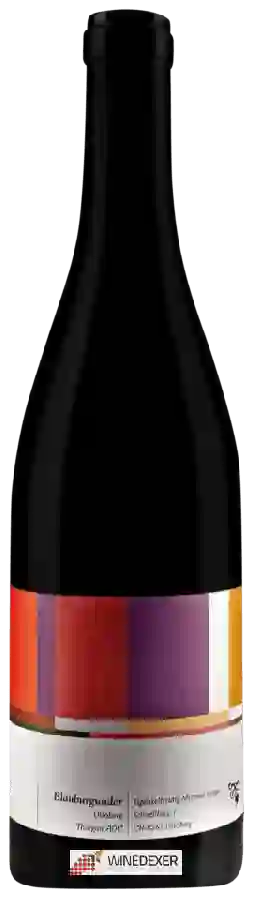
Winery Broger WeinbauBlauburgunder Ottoberg
 Red wine



In the mouth this red wine is a with a nice freshness.
This wine generally goes well with poultry, beef or veal.

Taste structure of the Blauburgunder Ottoberg from the Winery Broger Weinbau
Light | Bold | |
Smooth | Tannic | |
Dry | Sweet | |
Soft | Acidic |
In the mouth the Blauburgunder Ottoberg of Winery Broger Weinbau in the region of Thurgau is a with a nice freshness.
Food and wine pairings with Blauburgunder Ottoberg
Pairings that work perfectly with Blauburgunder Ottoberg



Original food and wine pairings with Blauburgunder Ottoberg

The Blauburgunder Ottoberg of Winery Broger Weinbau matches generally quite well with dishes of beef, veal or game (deer, venison) such as recipes of venison stew with red wine, sauté of veal with corsican style or rabbit with beer and mustard.
Details and technical informations about Winery Broger Weinbau's Blauburgunder Ottoberg.
Discover the grape variety: Soreli
Aromatic, structured whites with a pale golden robe, an ample palate with preserved acidity, and signature aromas of white stone fruits (apple, pear), white flowers and mineral notes reminiscent of Friulano. Productive and disease-resistant. Grown in northern Italy for organic and sustainably managed vineyards. Italian white hybrid obtained in 2006 at the University of Udine, a disease-resistant cross involving Tocai Friulano.
Last vintages of this wine
The best vintages of Blauburgunder Ottoberg from Winery Broger Weinbau are 0
Informations about the Winery Broger Weinbau
The Winery Broger Weinbau is one of of the world's greatest estates. It offers 10 wines for sale in the of Thurgau to come and discover on site or to buy online.

The wine region of Thurgau
Wine canton of north-eastern German-speaking Switzerland on the shores of Lake Constance and the Rhine (~265 ha), cradle of Müller-Thurgau bred locally in 1882. Signature Pinot Noir (Blauburgunder) dominant in red: fine and silky with signature notes of cherry, raspberry, undergrowth, sweet spices and a mineral touch, delicate tannins and lakeside freshness. Historic Müller-Thurgau as fruity white (light muscat, apple, flowers). Also lively Riesling-Silvaner.
The word of the wine: Bourbe
Solid elements suspended in the must. See settling.