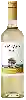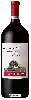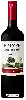
Winery Mendocino FogRuth's Chris' Selection Cabernet Sauvignon
 wine
wine
This wine generally goes well with
The Ruth's Chris' Selection Cabernet Sauvignon of the Winery Mendocino Fog is in the top 0 of wines of Mendocino County.
Details and technical informations about Winery Mendocino Fog's Ruth's Chris' Selection Cabernet Sauvignon.
Discover the grape variety: Frankenthal
It is said to be of Austrian origin, from the Tyrol to be precise, and for some it comes from Franconia in Germany. Some ampelographers consider that Frankenthal and Kavcina crna or Zametovka grown in Slovenia are identical, with perhaps only a few clonal differences, which have yet to be confirmed, although it is true that they all have a large number of synonyms in common. Frankenthal can still be found in Belgium, the Netherlands, Germany, Austria, Hungary, Slovenia, Croatia, Italy, Portugal, England, Chile and Australia. For a long time, it was cultivated under greenhouses as a table grape in the North, East and West of France. Today, it has been almost abandoned and is therefore in danger of disappearing.
Informations about the Winery Mendocino Fog
The Winery Mendocino Fog is one of of the world's greatest estates. It offers 4 wines for sale in the of Mendocino County to come and discover on site or to buy online.

The wine region of Mendocino County
The wine region of Mendocino County is located in the region of North Coast of California of United States. We currently count 344 estates and châteaux in the of Mendocino County, producing 763 different wines in conventional, organic and biodynamic agriculture. The wines of Mendocino County go well with generally quite well with dishes .
The wine region of California
California is the largest and most important wine region in the United States. It represents the southern two-thirds (850 miles or 1,370 kilometers) of the country's west coast. (Oregon and Washington make up the rest. ) The state also spans nearly 10 degrees of latitude.
The word of the wine: Chaptalization
The addition of sugar at the time of fermentation of the must, an ancient practice, but theorized by Jean-Antoine Chaptal at the dawn of the 19th century. The sugar is transformed into alcohol and allows the natural degree of the wine to be raised in a weak or cold year, or - more questionably - when the winegrower has a harvest that is too large to obtain good maturity.