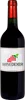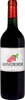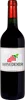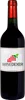
Winery Mas de La RoqueLe Paradoxe
 Red wine
In the mouth this red wine is a powerful with a nice balance between acidity and tannins.
This wine generally goes well with beef, veal or pasta.
The Le Paradoxe of the Winery Mas de La Roque is in the top 90 of wines of Fitou.
Taste structure of the Le Paradoxe from the Winery Mas de La Roque
Light | Bold | |
Smooth | Tannic | |
Dry | Sweet | |
Soft | Acidic |
In the mouth the Le Paradoxe of Winery Mas de La Roque in the region of Languedoc-Roussillon is a powerful with a nice balance between acidity and tannins.
Food and wine pairings with Le Paradoxe
Pairings that work perfectly with Le Paradoxe



Original food and wine pairings with Le Paradoxe
The Le Paradoxe of Winery Mas de La Roque matches generally quite well with dishes of beef, pasta or veal such as recipes of celine's version of moussaka (5th meeting), express beef cannelloni or veal grenadin with balsamic vinegar and honey.
Details and technical informations about Winery Mas de La Roque's Le Paradoxe.
Discover the grape variety: Kyoho
Tetraploid variety, of Japanese origin, which would have been obtained in 1939 by Oinoue by crossing the ishinara wase - mutation of campbell early - by the centennial seedless. In Japan, Kyoho is a very important cultivar. It is also found in South Korea, in the Republic of China (Taiwan), in the United States (California), in Chile, in Brazil, in Australia, etc.
Informations about the Winery Mas de La Roque
The Winery Mas de La Roque is one of of the world's greatest estates. It offers 9 wines for sale in the of Fitou to come and discover on site or to buy online.

The wine region of Fitou
Fitou is a red wine appellation in the heart of the Languedoc-Roussillon wine region in southern France. The wine takes its name from a small Village located a few kilometres from the Mediterranean coast. The typical Fitou wine is not dissimilar to the reds produced in the neighbouring Corbières (i. e.
The wine region of Languedoc-Roussillon
Languedoc (formerly Coteaux du Languedoc) is a key appellation used in the Languedoc-Roussillon wine region of southern France. It covers Dry table wines of all three colors (red, white and rosé) from the entire region, but leaves Sweet and Sparkling wines to other more specialized appellations. About 75% of all Languedoc wines are red, with the remaining 25% split roughly down the middle between whites and rosés. The appellation covers most of the Languedoc region and almost a third of all the vineyards in France.
The word of the wine: Oxidative (breeding)
A method of ageing which aims to give the wine certain aromas of evolution (dried fruit, bitter orange, coffee, rancio, etc.) by exposing it to the air; it is then matured either in barrels, demi-muids or unoaked casks, sometimes stored in the open air, or in barrels exposed to the sun and to temperature variations. This type of maturation characterizes certain natural sweet wines, ports and other liqueur wines.