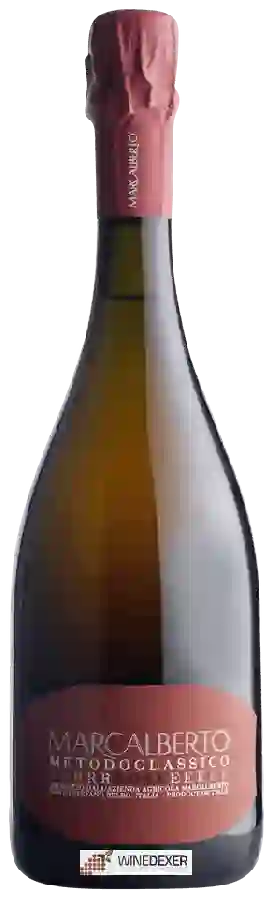
Winery MarcalbertoRosé
 Sparkling wine



This wine is a blend of 2 varietals which are the Chardonnay and the Pinot noir.
This wine generally goes well with pork, vegetarian or poultry.

Wine flavors and olphactive analysis

On the nose the Rosé of Winery Marcalberto in the region of Piedmont often reveals types of flavors of microbio.
Food and wine pairings with Rosé
Pairings that work perfectly with Rosé



Original food and wine pairings with Rosé



The Rosé of Winery Marcalberto matches generally quite well with dishes of veal, pork or game (deer, venison) such as recipes of veal roast casserole, homemade pork curry or old-fashioned venison stew.
Details and technical informations about Winery Marcalberto's Rosé.
Discover the grape variety: Chardonnay
Whites with many faces: mineral and taut at Chablis (lemon, green apple, flint), opulent and buttery at Meursault and Puligny-Montrachet (hazelnut, brioche, yellow fruits), tense and chalky in Champagne (Blanc de Blancs). Also vinified sparkling and widely exported (Sonoma, Margaret River, Casablanca). A Burgundian variety, a cross of Pinot Noir × Gouais Blanc, half-sibling of Aligoté.
Last vintages of this wine
The best vintages of Rosé from Winery Marcalberto are 2018, 2015, 0, 2013
Informations about the Winery Marcalberto
The Winery Marcalberto is one of of the world's greatest estates. It offers 8 wines for sale in the of Piedmont to come and discover on site or to buy online.

The wine region of Piedmont
Kingdom of Nebbiolo: Barolo and Barbaresco DOCG, long-ageing reds with firm tannins and lively acidity, complex aromas of withered rose, sour cherry, tar, truffle and undergrowth. More accessible, tangy Barbera on red fruit, supple, crisp Dolcetto. Sweet, floral sparkling Moscato d'Asti, mineral, lemony Gavi (Cortese) white, round, almondy Arneis from Roero. 50,000 ha across the Langhe, Roero and Monferrato, UNESCO.
The word of the wine: Vatting
After five to eight days of alcoholic fermentation, it is possible to prolong the maceration in order to extract the maximum amount of matter from the marc. The wines obtained in this way are rich and full-bodied, and in principle are intended for laying down.


