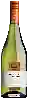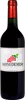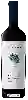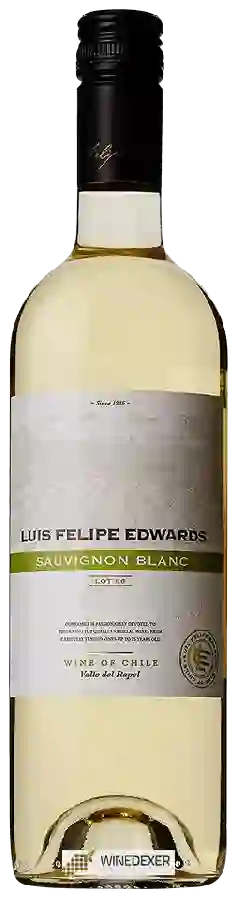
Winery Luis Felipe EdwardsLot 66 Sauvignon Blanc
 White wine


In the mouth this white wine is a with a nice freshness.
This wine generally goes well with vegetarian, shellfish or goat cheese.
Taste structure of the Lot 66 Sauvignon Blanc from the Winery Luis Felipe Edwards
Light | Bold | |
Dry | Sweet | |
Soft | Acidic |
In the mouth the Lot 66 Sauvignon Blanc of Winery Luis Felipe Edwards in the region of Central Valley is a with a nice freshness.
Wine flavors and olphactive analysis




On the nose the Lot 66 Sauvignon Blanc of Winery Luis Felipe Edwards in the region of Central Valley often reveals types of flavors of earth, vegetal or tree fruit and sometimes also flavors of spices, citrus fruit or tropical fruit.
Food and wine pairings with Lot 66 Sauvignon Blanc
Pairings that work perfectly with Lot 66 Sauvignon Blanc


Original food and wine pairings with Lot 66 Sauvignon Blanc
The Lot 66 Sauvignon Blanc of Winery Luis Felipe Edwards matches generally quite well with dishes of shellfish, vegetarian or goat cheese such as recipes of paella josé style, broccoli and blue cheese quiche without pastry or tagliatelle with goat cheese and caramelized chicken.
Details and technical informations about Winery Luis Felipe Edwards's Lot 66 Sauvignon Blanc.
Discover the grape variety: Posip
A very old grape variety grown in Croatia, on the island of Korcula in southern Dalmatia. It is said to be the result of a natural cross between two Croatian grape varieties, zlatarica blatska and bratkovina. It should not be confused with furmint, which has the synonym posip. Today, Posip can be found throughout Croatia and neighbouring countries... in France it is almost unknown, yet it seems interesting in the production of different/original white wines to discover.
Last vintages of this wine

The best vintages of Lot 66 Sauvignon Blanc from Winery Luis Felipe Edwards are 2019, 2013, 2018, 0 and 2017.
Informations about the Winery Luis Felipe Edwards
The Winery Luis Felipe Edwards is one of wineries to follow in Rapel Valley.. It offers 180 wines for sale in the of Rapel Valley to come and discover on site or to buy online.

The wine region of Rapel Valley
Rapel Valley is a large wine-producing region in Chile's Central Valley. Made up of the Colchagua and Cachapoal valleys, the area produces roughly a quarter of all Chilean wine. The Warm, Dry region makes a wide range of wine styles, ranging from everyday wines to some of Chile's most expensive and prestigious offerings. Cabernet Sauvignon, Syrah and Carmenère are the most important grape varieties planted here.
The wine region of Central Valley
The Central Valley (El Valle Central) of Chile is one of the most important wine-producing areas in South America in terms of Volume. It is also one of the largest wine regions, stretching from the Maipo Valley (just south of Santiago) to the southern end of the Maule Valley. This is a distance of almost 250 miles (400km) and covers a number of Climate types. The Central Valley wine region is easily (and often) confused with the geological Central Valley, which runs north–south for more than 620 miles (1000km) between the Pacific Coastal Ranges and the lower Andes.
The word of the wine: Muscat blanc à petits grains
A white grape variety cultivated since antiquity on the shores of the Mediterranean, it is considered the noblest of the muscats. It is mainly used to make sweet wines, often from mutage. In France, it is the sole variety used in many natural sweet wines: muscat-de-frontignan, muscat-de-mireval, muscat-de-lunel, muscat-de-saint-jean-de-minervois, muscat-de-beaumes-de-venise, muscat-du-cap-corse. Combined with Muscat d'Alexandrie, it gives Muscat-de-Rivesaltes. It is also used to make sparkling white wines (clairette-de-die; moscato d'asti and asti spumante in Italy) and dry wines (alsace-muscat). Powerfully aromatic and complex, its wines evoke fresh grapes, roses, exotic fruits, citrus fruits and spices.