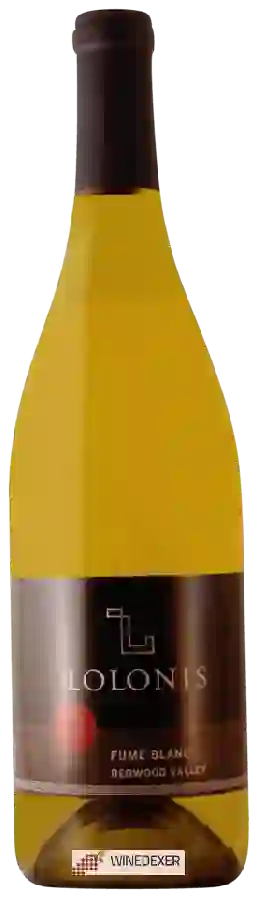
Winery LolonisFumé Blanc
 wine
wine
This wine generally goes well with
The Fumé Blanc of the Winery Lolonis is in the top 0 of wines of Redwood Valley.

Details and technical informations about Winery Lolonis's Fumé Blanc.
Discover the grape variety: Mondeuse
Structured, elegant age-worthy reds with a dark ruby colour, firm tannins and an ample palate with beautiful preserved acidity, showing signature aromas of black fruits (blackberry, blackcurrant), black pepper, violet and alpine spices. Star of the Vin de Savoie AOC appellation (Arbin, Saint-Jean-de-la-Porte), defining the great Savoyard age-worthy reds, a typical expression of the French Alps. Official synonym of Mondeuse Noire, French autochthonous black variety from Savoie.
Informations about the Winery Lolonis
The Winery Lolonis is one of of the world's great estates. It offers 25 wines for sale in the of Redwood Valley to come and discover on site or to buy online.

The wine region of Redwood Valley
High-altitude AVA (1997) in central Mendocino planted by Italians among the redwoods: Cabernet Sauvignon, Zinfandel, Petite Sirah, Merlot and Pinot Noir are signature refined and complex reds — gradual ripening thanks to Pacific air through a coastal gap. Higher acidity and later maturity than Ukiah Valley. Signature red soils, many organic producers, fresh Italian heritage identity.
The wine region of California
Powerful, sunny reds: dense Napa Cabernet Sauvignon (blackcurrant, chocolate, tobacco, ample tannins), spicy, jammy Zinfandel from the Sierra Foothills, silky red-fruited Pinot Noir on the cool coast (Sonoma, Russian River, Central Coast). Opulent, buttery Chardonnay, notes of yellow fruit and vanilla. Varied climate, from the hot interior to the Pacific-cooled coast. 80% of US production, 139 AVAs including Napa (1st AVA, 1981).
The word of the wine: Bracket
Black grape variety from Provence which contributes to the personality of the red wines of the AOC Bellet, near Nice. It gives a lightly colored but full-bodied wine that is good with age. Syn.: brachet.