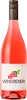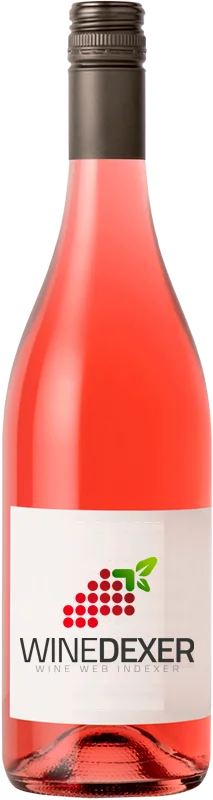
Winery Lillypilly EstateRed Velvet
 Pink wine


This wine generally goes well with
The Red Velvet of the Winery Lillypilly Estate is in the top 90 of wines of Riverina.
Details and technical informations about Winery Lillypilly Estate's Red Velvet.
Discover the grape variety: Frontenac
A cross between Landot 4511 and Vitis Riparia 89 (very resistant to cold) obtained in 1978 at the University of Minnesota (United States) and propagated from 1996. It can also be found in Canada (Quebec, Ontario, etc.), in Lithuania, etc. In France, it is practically unknown. Note that the white and grey Frontenac are derived from mutations of the black, encountered and isolated in 2003 for the grey and in September 2005 for the white. - Synonymy: MN 1047 (for all the grape variety synonyms, click here!).
Last vintages of this wine
The best vintages of Red Velvet from Winery Lillypilly Estate are 0
Informations about the Winery Lillypilly Estate
The Winery Lillypilly Estate is one of of the world's great estates. It offers 21 wines for sale in the of Riverina to come and discover on site or to buy online.

The wine region of Riverina
The wine region of Riverina is located in the region of Big Rivers of Nouvelle-Galles du Sud of Australia. Wineries and vineyards like the Domaine De Bortoli or the Domaine Bimbadgen produce mainly wines red, white and sweet. The most planted grape varieties in the region of Riverina are Chardonnay, Cabernet-Sauvignon and Durif, they are then used in wines in blends or as a single variety. On the nose of Riverina often reveals types of flavors of citrus, violet or tangerine and sometimes also flavors of clove, mushroom or wax.
The wine region of Nouvelle-Galles du Sud
The NewSouthWales wine appellation is made up of 16 different regions and covers approximately 810,000 square kilometres (312,000 square miles). This is the Size of the state of New South Wales, one of the six that make up the federal Commonwealth of Australia. Although it is one of the smallest Australian states geographically, it has been the most populous since the first European settlements in the 18th century. The South East Australia GI area is the largest in Australia and can include any wine produced in New South Wales as well as Victoria, Tasmania and Parts of South Australia.
The word of the wine: Brut nature (or ultra brut)
A type of champagne that has not received any dosage liqueur.