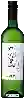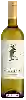
Winery Vignes d'OcSauvignon Blanc
 White wine


In the mouth this white wine is a .
This wine generally goes well with vegetarian, poultry or lean fish.
Taste structure of the Sauvignon Blanc from the Winery Vignes d'Oc
Light | Bold | |
Dry | Sweet | |
Soft | Acidic |
In the mouth the Sauvignon Blanc of Winery Vignes d'Oc in the region of Pays d'Oc is a .
Food and wine pairings with Sauvignon Blanc
Pairings that work perfectly with Sauvignon Blanc



Original food and wine pairings with Sauvignon Blanc


The Sauvignon Blanc of Winery Vignes d'Oc matches generally quite well with dishes of pasta, vegetarian or poultry such as recipes of pasta gratin with courgettes and ham, cream and tuna quiche or potato cakes.
Details and technical informations about Winery Vignes d'Oc's Sauvignon Blanc.
Discover the grape variety: Superior seedless
This variety was obtained in 1972 in the United States by Superior Farming Co. by crossing the cardinal with an unnamed apyrene variety. Superior seedless is present in Italy (Puglia), Spain, Morocco, Argentina and the United States (California, etc.).
Last vintages of this wine

The best vintages of Sauvignon Blanc from Winery Vignes d'Oc are 2015, 2018, 2016
Informations about the Winery Vignes d'Oc
The Winery Vignes d'Oc is one of of the world's greatest estates. It offers 7 wines for sale in the of Pays d'Oc to come and discover on site or to buy online.

The wine region of Pays d'Oc
Pays d'Oc is the PGI for red, white and rosé wines that are produced over a wide area of the southern coast of France. The PGI catchment area corresponds roughly to the Languedoc-roussillon">Languedoc-Roussillon wine region, one of the largest wine regions in France. The area covers all wines that are not produced under the strict laws that govern AOC-level appellations in the regions: among them, Corbières, Minervois and the Languedoc appellation itself. The Pays d'Oc PGI is arguably the most important in France, producing the majority of the country's PGI wines.
The word of the wine: Runoff
Failure of the vine flower to fertilize at the time of flowering, when the weather is too cold or rainy. Under these conditions, the vine will have few or no clusters.