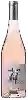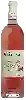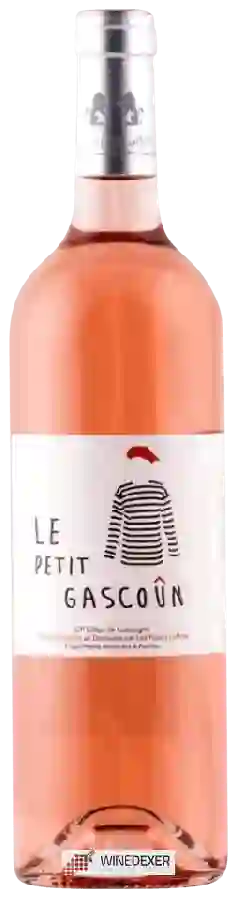
Winery Les Frères LaffitteLe Petit Gascoûn Rosé
 Pink wine



This wine is a blend of 4 varietals which are the Cabernet franc, the Marsanne, the Tannat and the Merlot.
In the mouth this pink wine is a with a nice freshness.
This wine generally goes well with pork, poultry or appetizers and snacks.

Taste structure of the Le Petit Gascoûn Rosé from the Winery Les Frères Laffitte
Light | Bold | |
Dry | Sweet | |
Soft | Acidic |
In the mouth the Le Petit Gascoûn Rosé of Winery Les Frères Laffitte in the region of Comté Tolosan is a with a nice freshness.
Wine flavors and olphactive analysis



On the nose the Le Petit Gascoûn Rosé of Winery Les Frères Laffitte in the region of Comté Tolosan often reveals types of flavors of cherry, strawberries or red currant and sometimes also flavors of microbio, tree fruit or citrus fruit.
Food and wine pairings with Le Petit Gascoûn Rosé
Pairings that work perfectly with Le Petit Gascoûn Rosé



Original food and wine pairings with Le Petit Gascoûn Rosé



The Le Petit Gascoûn Rosé of Winery Les Frères Laffitte matches generally quite well with dishes of shellfish, appetizers and snacks or lean fish such as recipes of quick crayfish chicken, beetroot and cream cheese verrines or fish on a bed of leek and potatoes.
Details and technical informations about Winery Les Frères Laffitte's Le Petit Gascoûn Rosé.
Discover the grape variety: Cabernet franc
Supple, fragrant reds with fine tannins and vibrant freshness, showing raspberry, violet, green pepper, pencil lead and gentle spice aromas. Star of the Loire as a single variety (Chinon, Bourgueil, Saumur-Champigny) and of the right bank of Bordeaux in blends (Cheval Blanc at 60%). Also in semi-dry Anjou rosés. A historic Bordeaux variety, parent of Cabernet-Sauvignon, Merlot and Carmenère.
Last vintages of this wine
The best vintages of Le Petit Gascoûn Rosé from Winery Les Frères Laffitte are 2022, 2019, 2017, 2016 and 0.
Informations about the Winery Les Frères Laffitte
The Winery Les Frères Laffitte is one of of the world's greatest estates. It offers 19 wines for sale in the of Côtes de Gascogne to come and discover on site or to buy online.

The wine region of Côtes de Gascogne
Reference for accessible dry whites of the South-West: signature Colombard as white king — lively and aromatic with notes of lemon, grapefruit, mango, passion fruit, white flowers and a touch of green citrus, brisk acidity and moderate alcohol (9-11%) — a gourmet aperitif. Straight Ugni Blanc in the blend, more floral Sauvignon and rounder Gros Manseng as complements. A few honeyed sweet wines. Vast Gers IGP (Armagnac), oceanic climate, clay-limestone soils.
The wine region of Comté Tolosan
IGP covering all of southwest France across 12 departments, a broad and accessible palette. On the Garonne right bank, supple reds dominate: signature Merlot with signature notes of plum, ripe cherry, cocoa and a herbaceous touch, round tannins. Firm Cabernet, spicy Syrah, tannic local Tannat. Left bank for whites: vivid Colombard and Gros Manseng (citrus, grapefruit, exotic fruits), aromatic Sauvignon.
The word of the wine: Sommelier
Person working in a restaurant and responsible for the wine service. The head sommelier is responsible for putting together the wine list, managing the sommelier brigade, and ensuring the sale of wines according to the dishes (food and wine pairing).