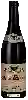
Winery Les Blanches FleursSaint-Aubin
 Red wine


In the mouth this red wine is a with a nice freshness.
This wine generally goes well with poultry, beef or veal.
Taste structure of the Saint-Aubin from the Winery Les Blanches Fleurs
Light | Bold | |
Smooth | Tannic | |
Dry | Sweet | |
Soft | Acidic |
In the mouth the Saint-Aubin of Winery Les Blanches Fleurs in the region of Burgundy is a with a nice freshness.
Food and wine pairings with Saint-Aubin
Pairings that work perfectly with Saint-Aubin



Original food and wine pairings with Saint-Aubin

The Saint-Aubin of Winery Les Blanches Fleurs matches generally quite well with dishes of beef, veal or game (deer, venison) such as recipes of roast beef with garlic, tunisian pasta or rabbit marinated with herbs and mustard.
Details and technical informations about Winery Les Blanches Fleurs's Saint-Aubin.
Discover the grape variety: Pinot noir
Pinot noir is an important red grape variety in Burgundy and Champagne, and its reputation is well known! Great wines such as the Domaine de la Romanée Conti elaborate their wines from this famous grape variety, and make it a great variety. When properly vinified, pinot noit produces red wines of great finesse, with a wide range of aromas depending on its advancement (fruit, undergrowth, leather). it is also the only red grape variety authorized in Alsace. Pinot Noir is not easily cultivated beyond our borders, although it has enjoyed some success in Oregon, the United States, Australia and New Zealand.
Informations about the Winery Les Blanches Fleurs
The Winery Les Blanches Fleurs is one of of the world's greatest estates. It offers 25 wines for sale in the of Côte de Beaune to come and discover on site or to buy online.

The wine region of Côte de Beaune
The Côte de Burgundy/cote-de-beaune/beaune">Beaune is a key wine region in Burgundy, eastern France. It owes its name to its main town, Beaune - the epicentre of local wine production and trade. Renowned for producing some of the world's most expensive white wines (most of which bear the name Montrachet in one form or another), the region also produces a handful of Burgundy's finest red wines, including those from the premier crus Pommard and grand cru Corton. As with most Burgundy wines, the white wines are made from Hardonnay">Chardonnay, the reds from Pinot Noir.
The wine region of Burgundy
Bourgogne is the catch-all regional appellation title of the Burgundy wine region in eastern France ("Bourgogne" is the French name for Burgundy). Burgundy has a Complex and comprehensive appellation system; counting Premier Cru and Grand Cru titles, the region has over 700 appellation titles for its wines. Thus, Burgundy wines often come from one Vineyard (or several separate vineyards) without an appellation title specific to the region, Village or even vineyard. A standard Burgundy wine may be made from grapes grown in one or more of Burgundy's 300 communes.
The word of the wine: Wiring
Action of periodically filling barrels containing wine, in order to offset evaporation and maintain a maximum level. The topping up allows to avoid the phenomenon of oxidation.