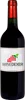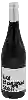
Winery LePlan-VermeerschGt-D Grand Terroir Doux
 Sweet wine
This wine generally goes well with beef and mature and hard cheese.
Food and wine pairings with Gt-D Grand Terroir Doux
Pairings that work perfectly with Gt-D Grand Terroir Doux


Original food and wine pairings with Gt-D Grand Terroir Doux
The Gt-D Grand Terroir Doux of Winery LePlan-Vermeersch matches generally quite well with dishes of beef or mature and hard cheese such as recipes of baeckeoffe or gratin comtois.
Details and technical informations about Winery LePlan-Vermeersch's Gt-D Grand Terroir Doux.
Discover the grape variety: Othello
Interspecific cross between the Clinton and the frankenthal or black-hamburg obtained in 1859 by Charles Arnold of Paris in Canada (Brant County in Ontario). In France, it is one of the six hybrids prohibited since 1935 (included in the European regulations): the Clinton, the Herbemont, the Isabelle, the Jacquez, the Noah and the Othello. It has been used as a sire in several crosses, notably by Couderc and Seibel. Today, the Othello has practically disappeared.
Informations about the Winery LePlan-Vermeersch
The Winery LePlan-Vermeersch is one of of the world's great estates. It offers 57 wines for sale in the of Vin de France to come and discover on site or to buy online.

The wine region of Vin de France
Vin de France is the most basic level of quality for wines from France. These are generally uncomplicated everyday drinks - most often blends, but perhaps also Varietal wines based on a well-known Grape variety such as Cabernet Sauvignon, Merlot, Chardonnay or Sauvignon Blanc. Wines from France are those that do not meet the criteria stipulated by the Protected Designation of Origin (PDO) or Protected Geographical Indication (PGI) laws (see information on French wine labels). This may be because the vineyards are outside the delimited production areas or because the grape varieties or winemaking techniques used do not conform to the rules of the local appellations.
The word of the wine: VDN
Natural sweet wine. Wine obtained by mutage of the must during fermentation by adding over-finished alcohol at 96 °, produced in the vineyards of Roussillon, Languedoc, Rhone Valley and Corsica.