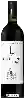
Château Lavergne-DulongL Bordeaux Sauvignon
 White wine



In the mouth this white wine is a powerful.
This wine generally goes well with pork, vegetarian or poultry.

Taste structure of the L Bordeaux Sauvignon from the Château Lavergne-Dulong
Light | Bold | |
Dry | Sweet | |
Soft | Acidic |
In the mouth the L Bordeaux Sauvignon of Château Lavergne-Dulong in the region of Bordeaux is a powerful.
Food and wine pairings with L Bordeaux Sauvignon
Pairings that work perfectly with L Bordeaux Sauvignon



Original food and wine pairings with L Bordeaux Sauvignon


The L Bordeaux Sauvignon of Château Lavergne-Dulong matches generally quite well with dishes of pork, vegetarian or poultry such as recipes of macaroonade from sète, quiche with bacon and gruyère cheese or chicken tagine with lemon confit (marrakech style).
Details and technical informations about Château Lavergne-Dulong's L Bordeaux Sauvignon.
Discover the grape variety: Frontenac
Deeply coloured, fruity reds with a dense purple robe, supple tannins and firm acidity, with intense aromas of black cherry, plum, blackcurrant, blackberry and spicy notes. Also made as expressive rosés and ice wines (Frontenac Gris). An extremely cold-hardy interspecific variety (down to -35°C on the vine), producing wines in cold US states (Minnesota, Wisconsin, Vermont) and Canada (Quebec). Created in 1996 at the University of Minnesota.
Informations about the Château Lavergne-Dulong
The Château Lavergne-Dulong is one of of the world's greatest estates. It offers 4 wines for sale in the of Bordeaux to come and discover on site or to buy online.

The wine region of Bordeaux
World-renowned age-worthy reds, led by round Merlot (plum, black fruit) or firm Cabernet Sauvignon (blackcurrant, cedar, graphite), blended with Cabernet Franc and Petit Verdot for tannic structure. Structured Médoc and Graves, velvety Saint-Émilion and Pomerol. Also crisp dry whites (Sauvignon/Sémillon) and opulent sweet Sauternes with honey and candied fruit. A 110,000 ha Gironde vineyard, 65 appellations, cradle of the 1855 classified growths.
The word of the wine: Cellar master
The cellar master is the technical manager of a winery (usually a professional oenologist), who presides over and oversees the wine-making process and its maturation. Unlike an oenologist in a wine laboratory, who intervenes on an ad hoc basis to assist the winemaker, the cellar master is part of the estate's technical team.