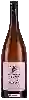
Winery La Croix des Loges - BonninRosé de Loire
 Pink wine


This wine generally goes well with
Details and technical informations about Winery La Croix des Loges - Bonnin's Rosé de Loire.
Discover the grape variety: Claverie
Claverie blanc is a grape variety that originated in France (South-West). It produces a variety of grape specially used for wine making. It is rare to find this grape to eat on our tables. This variety of grape is characterized by large bunches and large grapes. Claverie blanc can be found cultivated in these vineyards: South West, Cognac, Bordeaux, Provence & Corsica, Rhone Valley, Armagnac.
Informations about the Winery La Croix des Loges - Bonnin
The Winery La Croix des Loges - Bonnin is one of of the world's greatest estates. It offers 21 wines for sale in the of Rosé de Loire to come and discover on site or to buy online.

The wine region of Rosé de Loire
Rosé de Loire is a Dry rosé wine. It falls into the category of still wine. Rosé de Loire is produced in the vineyards of the Loire region, in the west of France and more precisely in the wine regions of Anjou-Saumur and Touraine. Administratively, Rosé de Loire can be produced in the departments of Maine-et-Loire, Indre-et-Loire, Loir-et-Cher, Deux-Sèvres and Vienne.
The wine region of Loire Valley
The Loire Valley is a key wine region in western France. It follows the course of the Loire River on its Long journey through the heart of France, from the inland hills of the Auvergne to the plains of the French Atlantic coast near Nantes (Muscadet country). Important in terms of quantity and quality, the region produces large quantities (about 4 million h/l each year) of everyday wines, as well as some of France's greatest wines. Diversity is another of the region's major assets; the styles of wine produced here range from the light, tangy Muscadet to the Sweet, honeyed Bonnezeaux, the Sparkling whites of Vouvray and the juicy, Tannic reds of Chinon and Saumur.
The word of the wine: Vinification of sweet wines
Moelleux and liquoreux wines are characterized by the presence of residual sugars (natural sugar of the grape), not transformed into alcohol under the effect of yeasts. The fermentation is stopped by cold and by the addition of sulphur dioxide (sulphur).