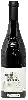
Winery La Bastide Saint DominiqueCentifolia Méditerranée Rosé
 Pink wine


This wine generally goes well with beef and mature and hard cheese.
Food and wine pairings with Centifolia Méditerranée Rosé
Pairings that work perfectly with Centifolia Méditerranée Rosé


Original food and wine pairings with Centifolia Méditerranée Rosé
The Centifolia Méditerranée Rosé of Winery La Bastide Saint Dominique matches generally quite well with dishes of beef or mature and hard cheese such as recipes of fondue with broth or lasagne with vegetables and savoy tomatoes.
Details and technical informations about Winery La Bastide Saint Dominique's Centifolia Méditerranée Rosé.
Discover the grape variety: Egiodola
Egiodola noir is a grape variety that originated in France (Languedoc). It produces a variety of grape specially used for wine making. It is rare to find this grape to eat on our tables. This variety of grape is characterized by large bunches of grapes of medium size. The Egiodola noir can be found in several vineyards: South-West, Cognac, Bordeaux, Loire Valley, Languedoc & Roussillon, Provence & Corsica, Rhone Valley, Savoie & Bugey, Beaujolais, Armagnac.
Last vintages of this wine
The best vintages of Centifolia Méditerranée Rosé from Winery La Bastide Saint Dominique are 2017, 2015
Informations about the Winery La Bastide Saint Dominique
The Winery La Bastide Saint Dominique is one of of the world's great estates. It offers 24 wines for sale in the of Méditerranée to come and discover on site or to buy online.

The wine region of Méditerranée
Méditérranée is a PGI title that covers wines produced in a large area of the South-eastern coast of France, roughly corresponding to the wine region of Provence but also including Part of the Rhône Valley. The PGI shares its territory with multiple AOC appellations as varied as Châteauneuf-du-Pape, Bandol and Côtes de Provence. The PGI Méditérranée catchment area extends over 10 departments (including the two on the island of Corsica), as well as smaller parts of the Isère, Loire and Rhône departments. Viticulture is essential to the culture and economy of this part of France.
The word of the wine: Oenologist
Specialist in wine-making techniques. It is a profession and not a passion: one can be an oenophile without being an oenologist (and the opposite too!). Formerly attached to the Faculty of Pharmacy, oenology studies have become independent and have their own university course. Learning to make wine requires a good chemical background but also, increasingly, a good knowledge of the plant. Some oenologists work in laboratories (analysis). Others, the consulting oenologists, work directly in the properties.