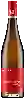
Weingut KrebsGrauburgunder Spätlese Trocken
 White wine
In the mouth this white wine is a .
This wine generally goes well with pork, cured meat or mushrooms.

Taste structure of the Grauburgunder Spätlese Trocken from the Weingut Krebs
Light | Bold | |
Dry | Sweet | |
Soft | Acidic |
In the mouth the Grauburgunder Spätlese Trocken of Weingut Krebs in the region of Baden is a .
Food and wine pairings with Grauburgunder Spätlese Trocken
Pairings that work perfectly with Grauburgunder Spätlese Trocken



Original food and wine pairings with Grauburgunder Spätlese Trocken

The Grauburgunder Spätlese Trocken of Weingut Krebs matches generally quite well with dishes of pork, spicy food or mushrooms such as recipes of pork chops with mustard, makrouna salsa (tunisian pastry) or broth for chinese fondue.
Details and technical informations about Weingut Krebs's Grauburgunder Spätlese Trocken.
Discover the grape variety: Cabernet-Volos
Deeply coloured, structured reds with a deep purple robe, firm tannins, an ample palate and preserved acidity; signature aromas of dark fruits (blackcurrant, blackberry), spices and herbal notes reminiscent of cabernet. Resistant to downy and powdery mildew. Grown in Switzerland, Germany and Belgium for modern organic vineyards in continental climates. Swiss black hybrid bred by Valentin Blattner in Soyhières (cabernet sauvignon × resistant).
Informations about the Weingut Krebs
The Weingut Krebs is one of of the world's greatest estates. It offers 17 wines for sale in the of Baden to come and discover on site or to buy online.

The wine region of Baden
German capital of Pinot Noir (Spätburgunder): silky, fine reds with notes of red fruits, cherry, undergrowth and sweet spices, melted tannins. Round Grauburgunder (Pinot Gris), lively Weissburgunder, supple Müller-Thurgau, mineral Riesling. Germany's 3rd region (15,000 ha) in Baden-Württemberg facing Alsace, one of the country's warmest climates, volcanic soils at the Kaiserstuhl. Cradle of modern great German reds, elegant and fine.
The word of the wine: Green harvest or green harvesting
The practice of removing excess bunches of grapes from certain vines, usually in July, but sometimes later. This is often necessary, but not always a good thing, as the remaining grapes tend to gain weight.