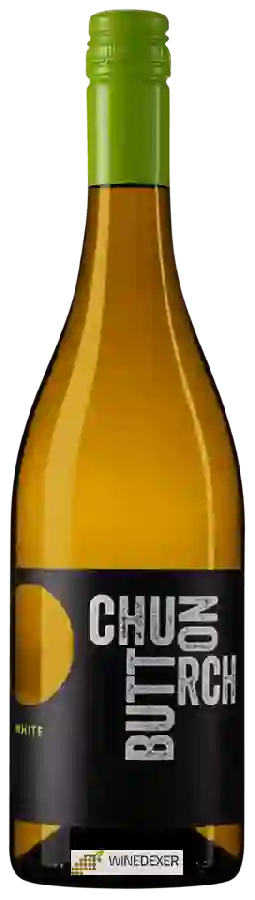
Winery KirchknopfChurchbutton White
 White wine



This wine generally goes well with
Details and technical informations about Winery Kirchknopf's Churchbutton White.
Discover the grape variety: Aubun
Aubun is not to be confused with another grape variety with the same sound, aubin. This one is a black grape plant of which the Vaucluse is the probable cradle. Covering nearly 5,400 hectares of vineyards in the late 1990s, its cultivation was reduced to some 1,400 hectares in the mid-2000s. California and Australia also have discreet plantations. In the Var, Lot-et-Garonne, Gers, Ardèche and other departments, aubun is authorized, if not recommended. Its third-period ripeness promises medium to large bunches of compact, cylindrical grapes that will produce medium-quality wine. Quite alcoholic, the wine produced from Aubun is a lightly colored red. After budburst, the shoots bear young branches covered with a cottony veil. The young leaves are yellowish and downy. The older ones have pubescent, cottony blades with 5 to 7 limbs.
Last vintages of this wine
The best vintages of Churchbutton White from Winery Kirchknopf are 2017, 0, 2018
Informations about the Winery Kirchknopf
The Winery Kirchknopf is one of of the world's greatest estates. It offers 14 wines for sale in the of Weinland to come and discover on site or to buy online.

The wine region of Weinland
Weinviertel DAC – whose name translates as "wine quarter" – is an appellation in Niederösterreich (Lower Austria). It is by far the largest Districtus Austriae Controllatus wine region in Austria. It was also the first Austrian wine region to be given that title, in 2002, with a DAC Reserve designation added in 2009. The designation applies only to white wines from the Grüner Veltliner Grape variety.
The word of the wine: Presses
The juice that results from pressing the grapes after fermentation. At the end of the maceration, the vats are emptied, the first juice obtained is called the free-run wine and the marc remaining at the bottom of the vat is then pressed to give the press wine. We say more quickly "the presses". Their quality varies according to the vintage and the maceration. A too vigorous extraction releases the tannins of pips and the wine of press can then prove to be very astringent. Often the winemaker raises it separately, deciding later whether or not to incorporate it totally or partially into the grand vin.