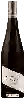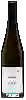
Winery Joachim FlickGrauburgunder Trocken
 White wine


In the mouth this white wine is a with a nice freshness.
This wine generally goes well with pork, cured meat or mushrooms.
Taste structure of the Grauburgunder Trocken from the Winery Joachim Flick
Light | Bold | |
Dry | Sweet | |
Soft | Acidic |
In the mouth the Grauburgunder Trocken of Winery Joachim Flick in the region of Rheingau is a with a nice freshness.
Food and wine pairings with Grauburgunder Trocken
Pairings that work perfectly with Grauburgunder Trocken


Original food and wine pairings with Grauburgunder Trocken

The Grauburgunder Trocken of Winery Joachim Flick matches generally quite well with dishes of pork, spicy food or mushrooms such as recipes of chicken ballotine with ham and mushrooms, mutton stew with potatoes and garlic or chicken legs with mushrooms and mustard.
Details and technical informations about Winery Joachim Flick's Grauburgunder Trocken.
Discover the grape variety: Bicane
We do not know exactly its origin. It has been used as a genitor to obtain new varieties, Pirovano's Italia in 1911 is a proud example. Today, it is no longer multiplied in nurseries and is therefore in danger of extinction.
Last vintages of this wine
The best vintages of Grauburgunder Trocken from Winery Joachim Flick are 2018, 0
Informations about the Winery Joachim Flick
The Winery Joachim Flick is one of of the world's great estates. It offers 61 wines for sale in the of Rheingau to come and discover on site or to buy online.

The wine region of Rheingau
Rheingau is one of the most important of Germany's 13 Anbaugebiete wine regions. However it is far from the biggest; with 3,076 hectares (7,600 acres) of Vineyard">Vineyards documented in 2012, its output is around one tenth of that from the Pfalz and Rheinhessen regions. Located on the Rhine a 20-minute drive west of Frankfurt, the -gau suffix denotes that it was once a county of the Frankish Empire. The classic Rheingau wine is a DryRiesling with pronounced Acidity and aromas of citrus fruits and smoke-tinged minerality – typically more "masculine" than its equivalent from the Mosel.
The word of the wine: Musky
Characteristic of the musk smell.