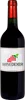
Winery Jesús Páez LorenzoLa Suertita Seco
 Red wine
This wine generally goes well with
The La Suertita Seco of the Winery Jesús Páez Lorenzo is in the top 40 of wines of Valle de la Orotava.
Details and technical informations about Winery Jesús Páez Lorenzo's La Suertita Seco.
Discover the grape variety: Mondeuse noire
Cultivated for a very long time in Savoie, it is not the black form of mondeuse blanche and Mondeuse grise is a natural mutation of mondeuse noire. According to Thierry Lacombe (I.N.R.A./Montpellier), the latter is the result of a natural intraspecific crossing between the black tressot and the white mondeuse. Mondeuse grise and Mondeuse noire are both registered in the official catalogue of wine grape varieties, list A1.
Informations about the Winery Jesús Páez Lorenzo
The Winery Jesús Páez Lorenzo is one of of the world's greatest estates. It offers 6 wines for sale in the of Valle de la Orotava to come and discover on site or to buy online.

The wine region of Valle de la Orotava
The wine region of Valle de la Orotava is located in the region of Iles Canaries of Spain. Wineries and vineyards like the Domaine Tajinaste or the Domaine Envínate produce mainly wines red, white and pink. The most planted grape varieties in the region of Valle de la Orotava are Tempranillo, Teroldego and Albillo mayor, they are then used in wines in blends or as a single variety. On the nose of Valle de la Orotava often reveals types of flavors of cherry, cream or stone and sometimes also flavors of pear, lemon or apricot.
The wine region of Iles Canaries
The archipelago of the Canary Islands (or Las Canarias) is an autonomous community of Spain located in the North Atlantic Ocean, 110 km from the west coast of Morocco. The wine trade there is far from famous - few local wines come out of the Canary Islands - but there is a Long and unique wine tradition in the region. The spectacularly high Canary Islands are located at a latitude of about 28°N, making it the most tropical wine region in Europe. It was thanks to this position, once traversed by naval trade routes, that the local wine industry flourished, shortly after the islands came under Spanish control in the early 15th century.
The word of the wine: Deposit
Solid particles that can naturally coat the bottom of a bottle of wine. It is rather a guarantee that the wine has not been mistreated: in fact, to avoid the natural deposit, rather violent processes of filtration or cold passage (- 7 or - 8 °C) are used in order to precipitate the tartar (the small white crystals that some people confuse with crystallized sugar: just taste to dissuade you from it)