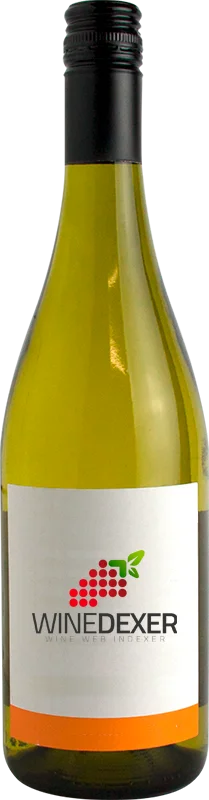
Winery J. M. PerdikourisChardonnay
 White wine



In the mouth this white wine is a powerful.
This wine generally goes well with rich fish (salmon, tuna etc), shellfish or mild and soft cheese.
The Chardonnay of the Winery J. M. Perdikouris is in the top 5 of wines of Coteaux de Tannay.

Taste structure of the Chardonnay from the Winery J. M. Perdikouris
Light | Bold | |
Dry | Sweet | |
Soft | Acidic |
In the mouth the Chardonnay of Winery J. M. Perdikouris in the region of Val de Loire is a powerful.
Food and wine pairings with Chardonnay
Pairings that work perfectly with Chardonnay



Original food and wine pairings with Chardonnay


The Chardonnay of Winery J. M. Perdikouris matches generally quite well with dishes of pasta, rich fish (salmon, tuna etc) or shellfish such as recipes of salmon and spinach lasagna, quiche with leeks and fresh salmon from flo or marco polo salad.
Details and technical informations about Winery J. M. Perdikouris's Chardonnay.
Discover the grape variety: Chardonnay
Whites with many faces: mineral and taut at Chablis (lemon, green apple, flint), opulent and buttery at Meursault and Puligny-Montrachet (hazelnut, brioche, yellow fruits), tense and chalky in Champagne (Blanc de Blancs). Also vinified sparkling and widely exported (Sonoma, Margaret River, Casablanca). A Burgundian variety, a cross of Pinot Noir × Gouais Blanc, half-sibling of Aligoté.
Last vintages of this wine
The best vintages of Chardonnay from Winery J. M. Perdikouris are 2012, 0
Informations about the Winery J. M. Perdikouris
The Winery J. M. Perdikouris is one of of the world's greatest estates. It offers 4 wines for sale in the of Coteaux de Tannay to come and discover on site or to buy online.

The wine region of Coteaux de Tannay
IGP from the northern Nièvre, at the crossroads of Burgundy and Centre-Val de Loire (~20 ha, hillsides at 150–250 m, Bathonian argilo-calcareous soils, continental climate with oceanic and Loire influences, warm days and cool summer nights, IGP status 2011 renaissance): Melon and Chardonnay are the signature whites (90% of production) — lively profiles with characteristic softness and roundness. Light reds and rosés from Pinot Noir and Gamay, Pinot Gris as complement.
The wine region of Val de Loire
France's most diverse vineyard, 800 km along the Loire (~48,300 ha). Flagship whites: lively, mineral Sauvignon from Sancerre-Pouilly (citrus, boxwood, gunflint), Loire Chenin from vibrant dry to noble sweet wines (quince, honey, taut acidity), Melon de Bourgogne of saline Muscadet on lees. Cabernet Franc reds (Chinon, Bourgueil, Saumur-Champigny): raspberry, bell pepper, graphite, silky tannins. Sparkling Cremants with brioche-apple notes.
The word of the wine: Phenolic ripeness
A distinction is made between the ripeness of sugars and acids and the ripeness of tannins and other compounds such as anthocyanins and tannins, which will bring structure and colour. Grapes can be measured at 13° potential without having reached this phenolic maturity. Vinified at this stage, they will give hard, astringent wines, without charm.