Winery IvanhoeGrand Liqueur Muscat
 wine
wine
This wine generally goes well with
The Grand Liqueur Muscat of the Winery Ivanhoe is in the top 0 of wines of Pokolbin.
Details and technical informations about Winery Ivanhoe's Grand Liqueur Muscat.
Discover the grape variety: Fernao Pires
In Portugal, it is one of the most planted white grape varieties, and we have found it to be very similar to the torrontés grown in Spain (Galicia). It can be found in Australia and South Africa, but is almost unknown in France.
Informations about the Winery Ivanhoe
The Winery Ivanhoe is one of of the world's great estates. It offers 43 wines for sale in the of Pokolbin to come and discover on site or to buy online.

The wine region of Pokolbin
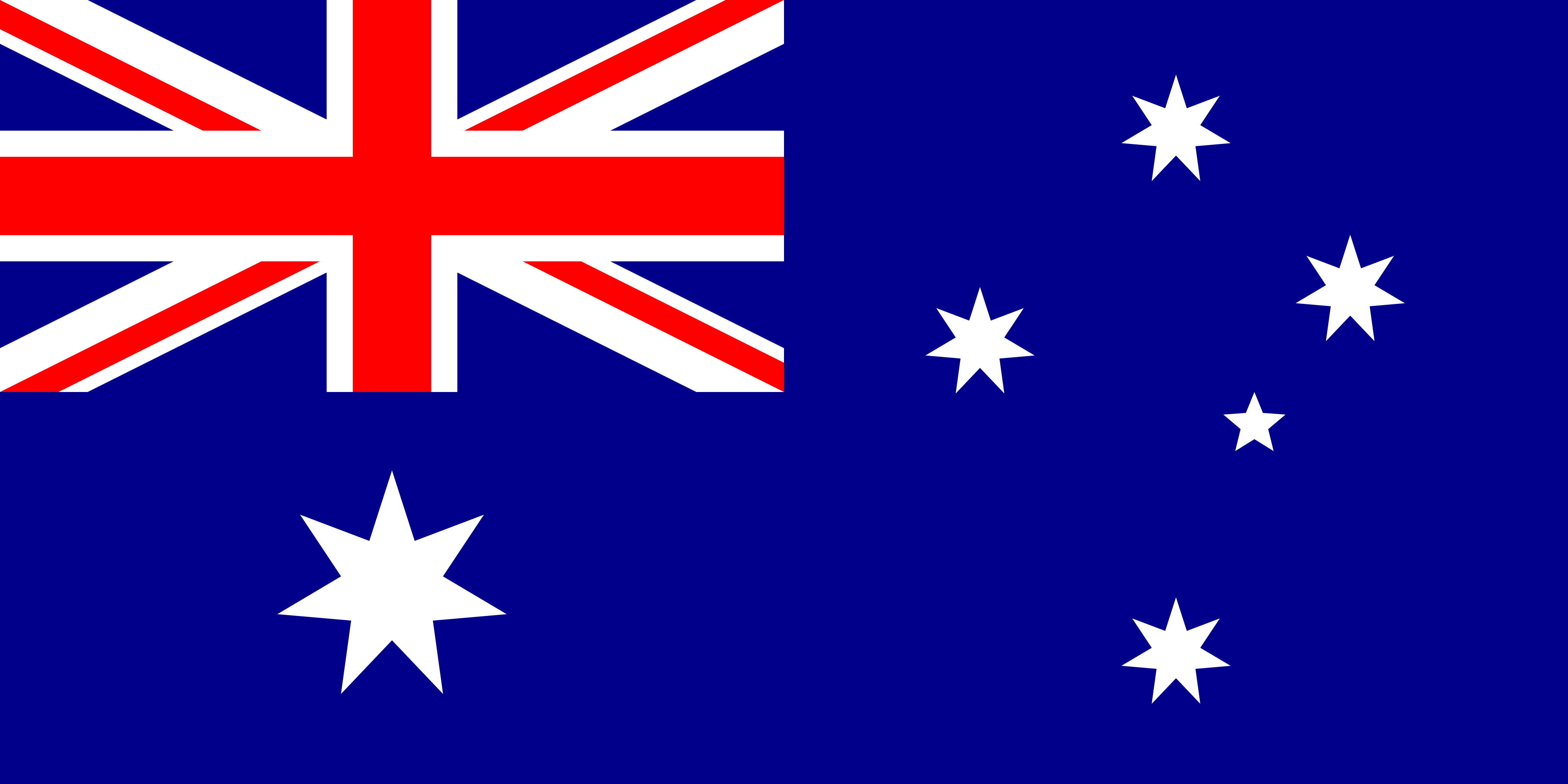
The wine region of Pokolbin is located in the region of Hunter of Nouvelle-Galles du Sud of Australia. Wineries and vineyards like the Domaine Tulloch or the Domaine Piggs Peake produce mainly wines white and red. The most planted grape varieties in the region of Pokolbin are Chardonnay, Cabernet-Sauvignon and Verdelho, they are then used in wines in blends or as a single variety. On the nose of Pokolbin often reveals types of flavors of non oak, earth or oak and sometimes also flavors of spices, red fruit or black fruit.
The wine region of Nouvelle-Galles du Sud
The NewSouthWales wine appellation is made up of 16 different regions and covers approximately 810,000 square kilometres (312,000 square miles). This is the Size of the state of New South Wales, one of the six that make up the federal Commonwealth of Australia. Although it is one of the smallest Australian states geographically, it has been the most populous since the first European settlements in the 18th century. The South East Australia GI area is the largest in Australia and can include any wine produced in New South Wales as well as Victoria, Tasmania and Parts of South Australia.
The word of the wine: Douçâtre
Soft wine with a dominant sweetness at the expense of freshness.