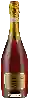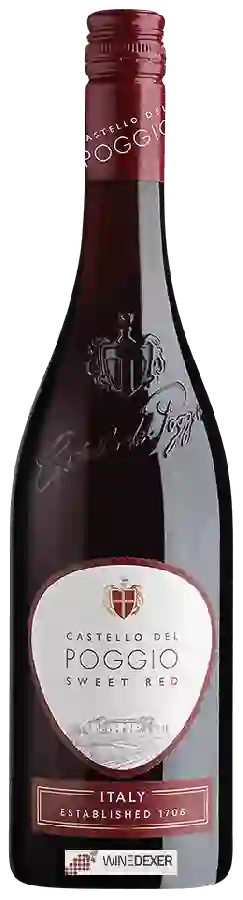
Winery Castello del PoggioSweet Red
 Sweet wine


This wine generally goes well with
The Sweet Red of the Winery Castello del Poggio is in the top 20 of wines of Piedmont.

Wine flavors and olphactive analysis



On the nose the Sweet Red of Winery Castello del Poggio in the region of Piedmont often reveals types of flavors of oak, tree fruit or red fruit and sometimes also flavors of black fruit.
Details and technical informations about Winery Castello del Poggio's Sweet Red.
Discover the grape variety: Kéknyelű
Mineral and structured whites for ageing, with a golden colour, a taut palate with high acidity, and signature aromas of white flowers (acacia), citrus (lemon, grapefruit), flint and typified volcanic notes. Prestigious and exclusive profile. Star of Badacsony, grown almost exclusively on the volcanic slopes of Mount Badacsony above Lake Balaton; a Hungarian patrimonial jewel. Native Hungarian white variety from the Balaton region.
Last vintages of this wine
The best vintages of Sweet Red from Winery Castello del Poggio are 2018, 0
Informations about the Winery Castello del Poggio
The Winery Castello del Poggio is one of of the world's greatest estates. It offers 23 wines for sale in the of Piedmont to come and discover on site or to buy online.

The wine region of Piedmont
Kingdom of Nebbiolo: Barolo and Barbaresco DOCG, long-ageing reds with firm tannins and lively acidity, complex aromas of withered rose, sour cherry, tar, truffle and undergrowth. More accessible, tangy Barbera on red fruit, supple, crisp Dolcetto. Sweet, floral sparkling Moscato d'Asti, mineral, lemony Gavi (Cortese) white, round, almondy Arneis from Roero. 50,000 ha across the Langhe, Roero and Monferrato, UNESCO.
The word of the wine: Young
A very relative term that can designate a wine of the year that is already at its optimum, as well as a wine that has passed its first year but has not yet developed all its qualities.