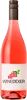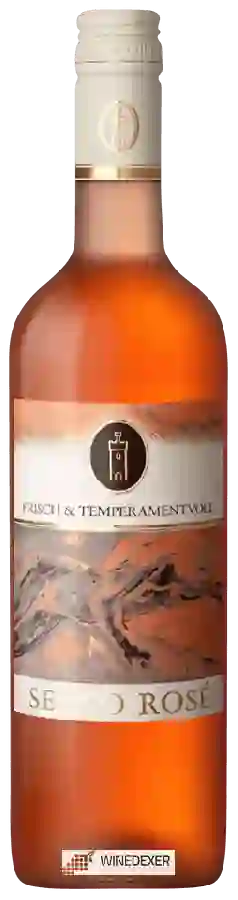
Winery HeuchelbergSecco Rosè
 Pink wine


This wine generally goes well with vegetarian

Food and wine pairings with Secco Rosè
Pairings that work perfectly with Secco Rosè

Original food and wine pairings with Secco Rosè
The Secco Rosè of Winery Heuchelberg matches generally quite well with dishes of vegetarian such as recipes of quiche without pastry.
Details and technical informations about Winery Heuchelberg's Secco Rosè.
Discover the grape variety: Subéreux
Simple, lively dry whites with a pale golden robe, an airy palate with preserved acidity. Understated aromas of citrus and white flowers. Disease-resistant. Now marginal, surviving in a few heritage French plots; one of the older hybrids preserved in varietal collections and a parent of Seyval Blanc. A French white hybrid obtained by Albert Seibel (Seibel 4938) in the early twentieth century.
Last vintages of this wine
The best vintages of Secco Rosè from Winery Heuchelberg are 0
Informations about the Winery Heuchelberg
The Winery Heuchelberg is one of of the world's greatest estates. It offers 86 wines for sale in the of Württemberg to come and discover on site or to buy online.

The wine region of Württemberg
Rare predominantly red region in Germany (nearly 70%). Supple, fruity everyday reds: light, crisp Trollinger (Schiava) with red fruits, more structured, spicy, deep Lemberger (Blaufränkisch), generous Schwarzriesling (Pinot Meunier). Riesling king of whites (>2,000 ha), lively and mineral, citrus and green apple. Germany's 4th region (11,500 ha) on the Neckar slopes around Heilbronn and Stuttgart.
The word of the wine: Saignée (rosé de)
Rosé wine made from a vat of black grapes after a short maceration period.