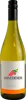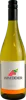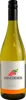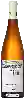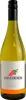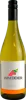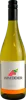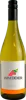
Winery Heinz NikolaiWeissburgunder Trocken
 White wine
In the mouth this white wine is a with a nice freshness.
This wine generally goes well with rich fish (salmon, tuna etc), shellfish or mild and soft cheese.
Taste structure of the Weissburgunder Trocken from the Winery Heinz Nikolai
Light | Bold | |
Dry | Sweet | |
Soft | Acidic |
In the mouth the Weissburgunder Trocken of Winery Heinz Nikolai in the region of Rheingau is a with a nice freshness.
Food and wine pairings with Weissburgunder Trocken
Pairings that work perfectly with Weissburgunder Trocken



Original food and wine pairings with Weissburgunder Trocken

The Weissburgunder Trocken of Winery Heinz Nikolai matches generally quite well with dishes of rich fish (salmon, tuna etc), shellfish or mild and soft cheese such as recipes of smoked salmon sandwich, oven-roasted breton lobster with salted butter from the jaguin brothers (the... or potato and raclette pie.
Details and technical informations about Winery Heinz Nikolai's Weissburgunder Trocken.
Discover the grape variety: Verdelet
Interspecific crossing between 5455 Seibel and 4938 Seibel (see graph of parentage by clicking here!) obtained by Albert Seibel (1844-1936). This direct-producing hybrid has been very little cultivated in France, in the United States white wines were produced.
Informations about the Winery Heinz Nikolai
The Winery Heinz Nikolai is one of of the world's great estates. It offers 51 wines for sale in the of Rheingau to come and discover on site or to buy online.

The wine region of Rheingau
Rheingau is one of the most important of Germany's 13 Anbaugebiete wine regions. However it is far from the biggest; with 3,076 hectares (7,600 acres) of Vineyard">Vineyards documented in 2012, its output is around one tenth of that from the Pfalz and Rheinhessen regions. Located on the Rhine a 20-minute drive west of Frankfurt, the -gau suffix denotes that it was once a county of the Frankish Empire. The classic Rheingau wine is a DryRiesling with pronounced Acidity and aromas of citrus fruits and smoke-tinged minerality – typically more "masculine" than its equivalent from the Mosel.
The word of the wine: Nervous
Said of a wine that leaves its mark on the palate with its strong characters and a hint of acidity, but without excess.