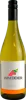
Winery HeinstadtGrauburgunder Trocken
 wine
wine
This wine generally goes well with
The Grauburgunder Trocken of the Winery Heinstadt is in the top 0 of wines of Bingen.
Details and technical informations about Winery Heinstadt's Grauburgunder Trocken.
Discover the grape variety: Charmont
Intraspecific crossing between Chasselas and Chardonnay, obtained in 1965 by Jean-Louis Simon and selected by André Jacquinet at the Agroscope Changins-Wädenswil research station (Switzerland). This grape variety is known and cultivated in Switzerland, but it can also be found in Hungary, Germany, Italy, etc., and is virtually unknown in France. With the same parents, Jean-Louis Simon also obtained the doral.
Informations about the Winery Heinstadt
The Winery Heinstadt is one of of the world's greatest estates. It offers 13 wines for sale in the of Bingen to come and discover on site or to buy online.

The wine region of Bingen
The wine region of Bingen is located in the region of Rheinhessen of Germany. Wineries and vineyards like the Domaine Rheinberg Kellerei or the Domaine Villa Nau produce mainly wines white, sparkling and red. The most planted grape varieties in the region of Bingen are Riesling et Dornfelder, they are then used in wines in blends or as a single variety. On the nose of Bingen often reveals types of flavors of tree fruit.
The wine region of Rheinhessen
Rheinhessen is Germany's largest region for producing the quality wines of the Qualitätswein bestimmter Anbaugebiete (QbA) and Prädikatswein designations, with roughly 26,500 hectares (65,000 acres) of Vineyard">Vineyards as of 2014. Many of its most significant viticultural areas are favorably influenced by the Rhine river, which runs aLong its North and eastern borders. The Rhine, along with the Nahe river to the west and the Haardt mountains to its South, form a natural border. Rheinhessen covers an area south of Rheingau, north of Pfalz and east of Nahe, and is located within the Rhineland-Palatinate federal state.
The word of the wine: Malic (acid)
An acid that occurs naturally in many wines and is transformed into lactic acid during malolactic fermentation.